
EV Charger Service & Repair
EV CHARGER SERVICE & REPAIR IN Phoenix, AZ
Most charger enclosures are rated for 40°C, about 104°F, and a Phoenix garage in July runs 110 to 130°F, so the unit on your wall spends summer outside its rating. MaxCharged handles EV charger repair in Phoenix, AZ for homes across Maricopa County and businesses statewide: fault diagnosis, breaker trips, damaged wiring and connections, surge damage, replacement when a unit cannot be saved, and preventative maintenance for Tesla and other major brands. Tesla-certified, licensed and insured, 10 years of EV charger work.
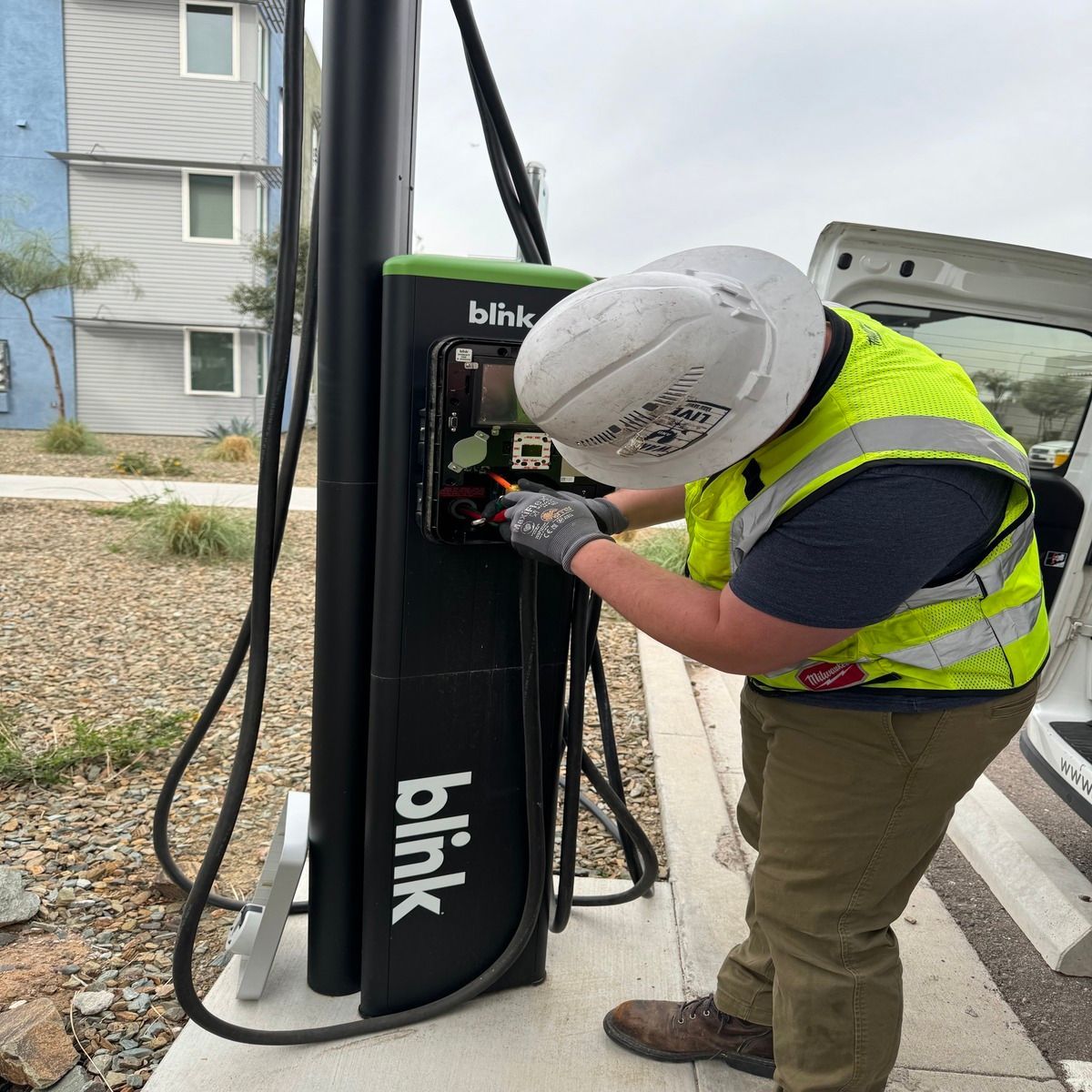
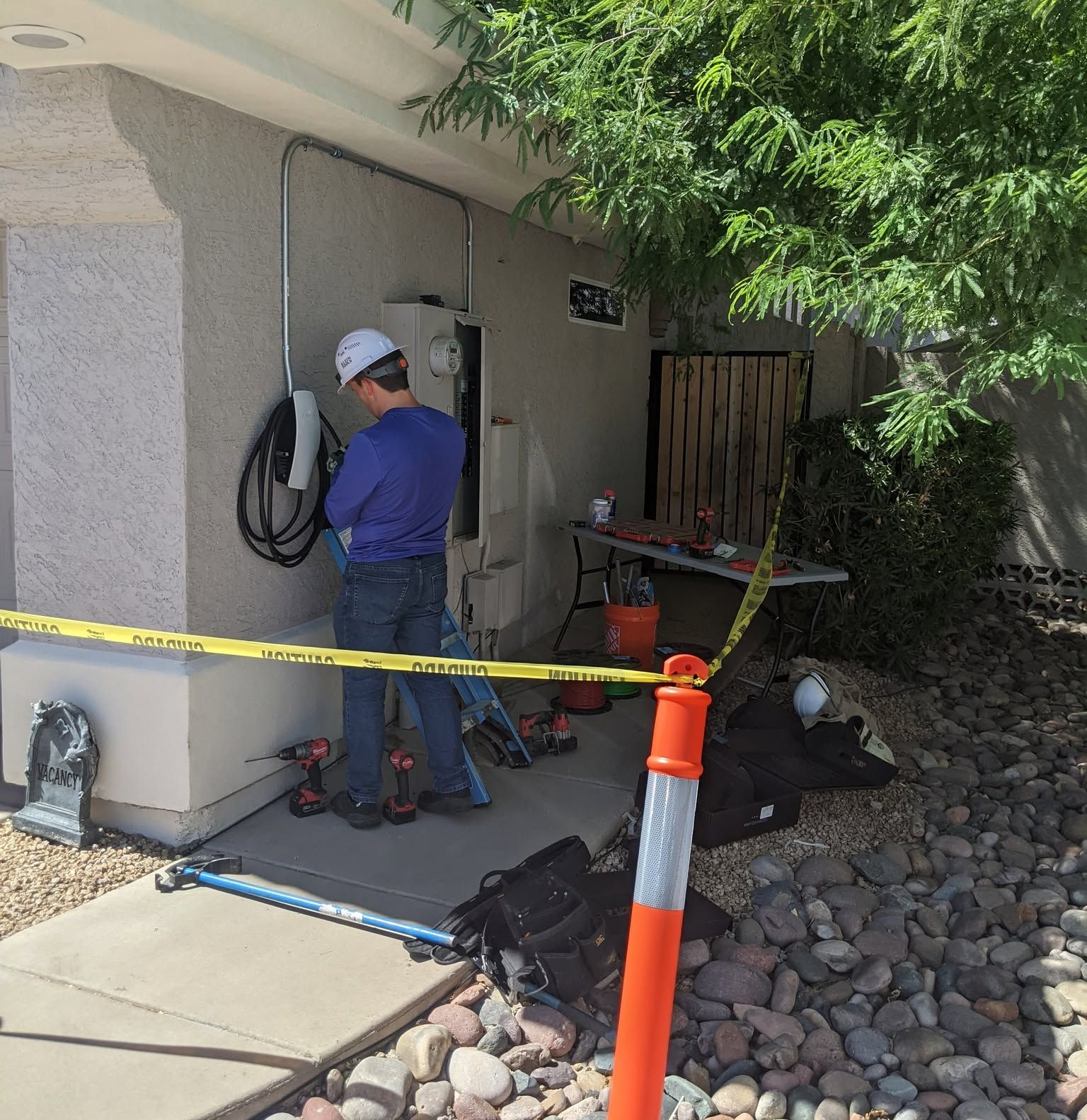
THE CHARGER IS USUALLY NOT THE PROBLEM.
A dead charger gets blamed first because it is the part you can see. Half the time the fault sits elsewhere: a lug that loosened over 3 summers, a breaker worn out by continuous load, a GFCI breaker fighting the charger's own ground-fault protection, or a car with a tired 12-volt battery. We test the whole path before condemning the unit.
Repair comes first when repair is safe and the manufacturer still supports the unit. Replacement is the answer when parts are gone or the damage runs deeper than a board, and we say which up front.
✓ Tesla and all major brands
✓ Charger versus vehicle isolated
✓ Homes and businesses served
✓ Free estimate before any repair
EV CHARGER SERVICE & REPAIR
HEAT KILLS CHARGERS SLOWLY, THEN ALL AT ONCE.
Plastic housings chalk and crack under desert UV, solder joints fatigue with every 40°F swing between night and afternoon, and a cooling fan clogged with dust stops moving air across the electronics. The charger keeps working at reduced rate for months, throwing an occasional overheat warning, until one afternoon it does not. In Phoenix, AZ, we see that pattern on garage walls and carport posts every summer, and we know which parts fail first.
MONSOON SEASON IS SURGE SEASON.
Arizona's monsoon runs June 15 to September 30, and in 2025 NWS Phoenix counted over 200,000 cloud-to-ground lightning strikes across the state. Lightning need not hit the house; a strike on a nearby line sends a spike down the service and through the charger's control board. Surge protection at the main panel is the fix, and a dead charger after a storm is the call we get most in August.
WE HAVE SEEN THIS FAULT CODE BEFORE.
After 10 years of wiring chargers, a blinking pattern or an app message usually tells us where to look before the ladder comes off the truck. That saves you paying for an installer to learn on your wall. We know which breakers, lugs, and connectors the common brands use, so most diagnoses finish in one visit instead of a second trip to confirm a guess. What is your charger telling you right now?
WHY CHOOSE US FOR EV CHARGER SERVICE & REPAIR.
The Whole Circuit Gets Tested
A repair that only looks at the charger misses loose lugs, a heat-worn breaker, or an undersized conductor. We check from the panel to the connector, measuring voltage drop and temperature at every connection, so the fix addresses the cause, not the symptom.
Charger Or Car, Answered Plainly
Nobody wants to pay for a charger repair when the car is at fault. We test your charger with a known-good car and your car on a known-good charger, and you get an answer about which side needs attention before anything is replaced.
Repair Before Replacement
A failed contactor or fried control board is often a part swap, not a new unit. We replace what the manufacturer still supports and say plainly when a charger is past saving, so you never buy hardware a smaller fix would have avoided.
Any Brand On The Wall
Tesla certification covers the Wall Connector and its power-sharing setup. It does not limit us. Autel, Wallbox, ChargePoint, Blink, Emporia, Grizzl-E, and the unit that came in the box with your car all get the same diagnostic pass and the same repair care.
Findings In Writing Before Work
Every diagnosis ends with a written note that names the failed part or connection and states whether repair or replacement makes sense. You approve a defined scope, not an open-ended service call, and nothing gets ordered or removed until you do.
Maintenance Before The Breakdown
Heat and monsoon moisture loosen connections and age enclosure seals faster than almost anywhere else in the country. A scheduled inspection every 6 to 12 months catches those problems while the fix is a torque wrench and a gasket, not a replacement charger.
WHAT WE FIX
OUR EV CHARGER SERVICE & REPAIR WORK
Charger problems arrive in a few recurring shapes: a unit that will not start, a breaker that trips mid-session, a slow charge, a red light after a storm. The 6 services below cover each, at homes and businesses.
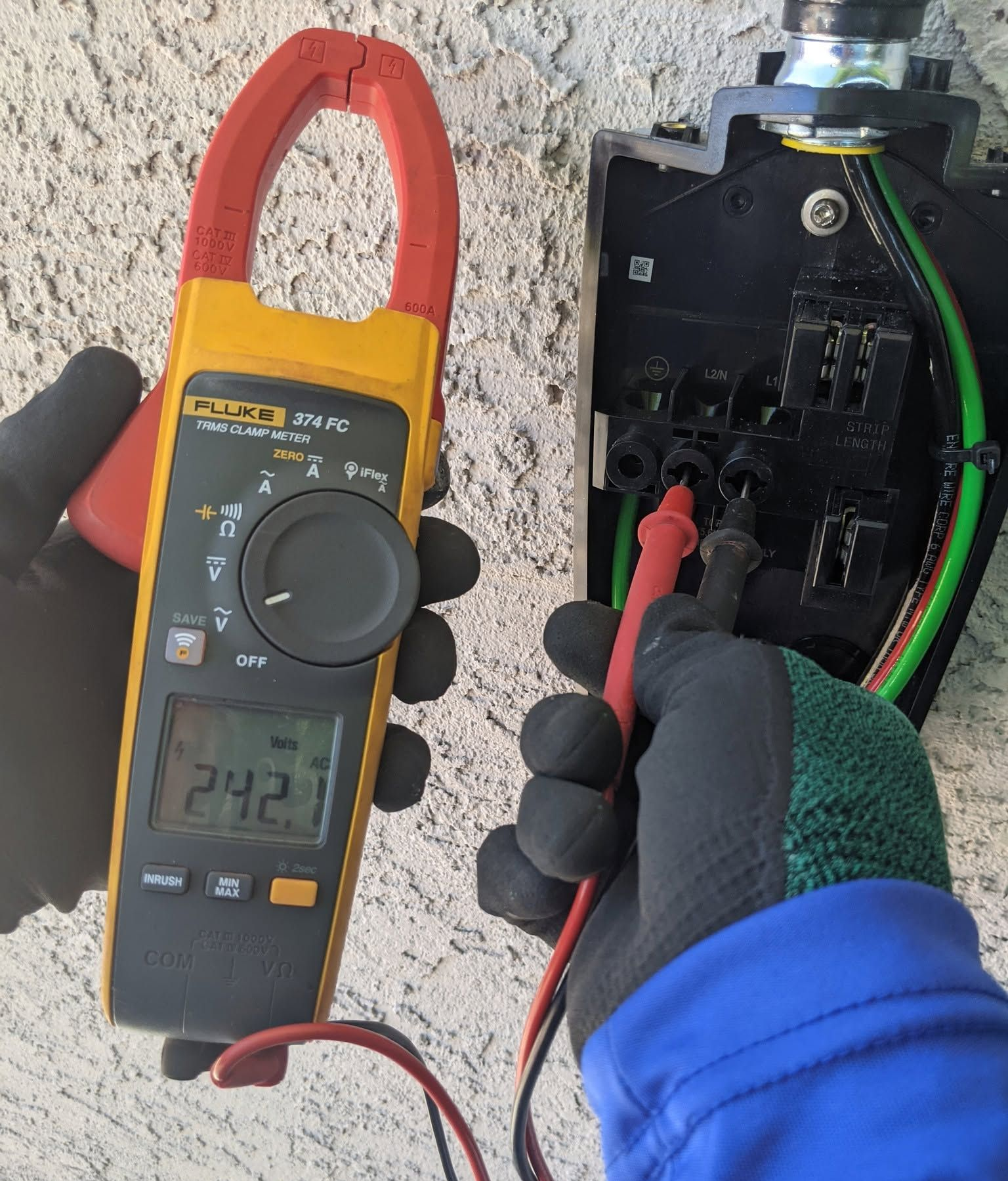
DIAGNOSE
Charger Diagnostics and Fault Isolation
Error codes, blink patterns, and app messages get read first, then the circuit gets measured under load. We isolate the fault to the charger, the wiring, the breaker, or the vehicle, and put the finding in writing before recommending a repair.
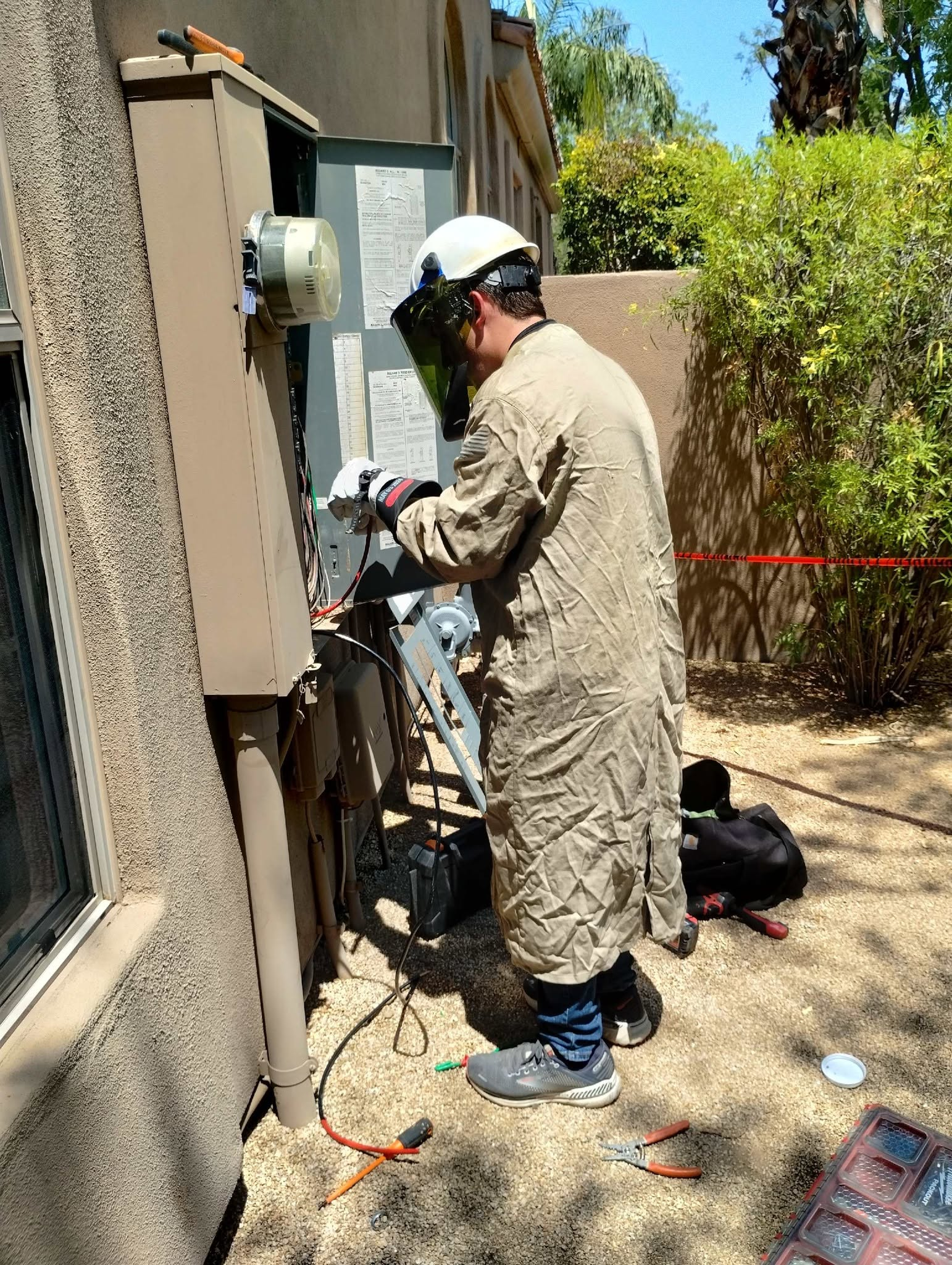
TRIP FIX
Breaker Trip Troubleshooting
Tripping during a charge usually traces to a loose connection building heat, wiring undersized for continuous draw, a breaker worn out by years of load, or doubled GFCI protection. Each has a different fix, and guessing wastes your money, so we measure first.
REWIRE
Wiring and Connection Repair
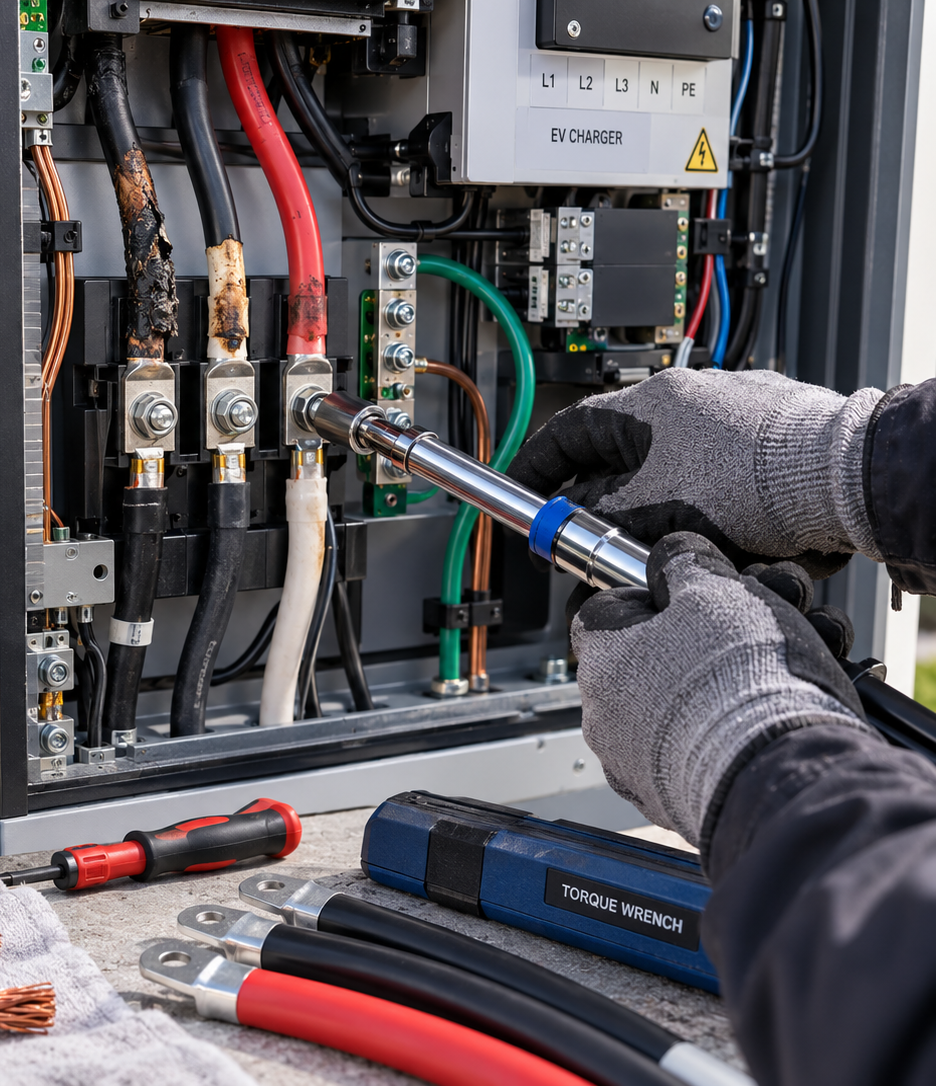
Conductors that ran hot for a few summers show discoloration at the terminals and brittle insulation near the charger. We re-terminate, replace damaged runs, and torque every lug to the manufacturer's spec so the connection stops loosening with each heat cycle.
SURGE DAMAGE
Surge Damage Repair
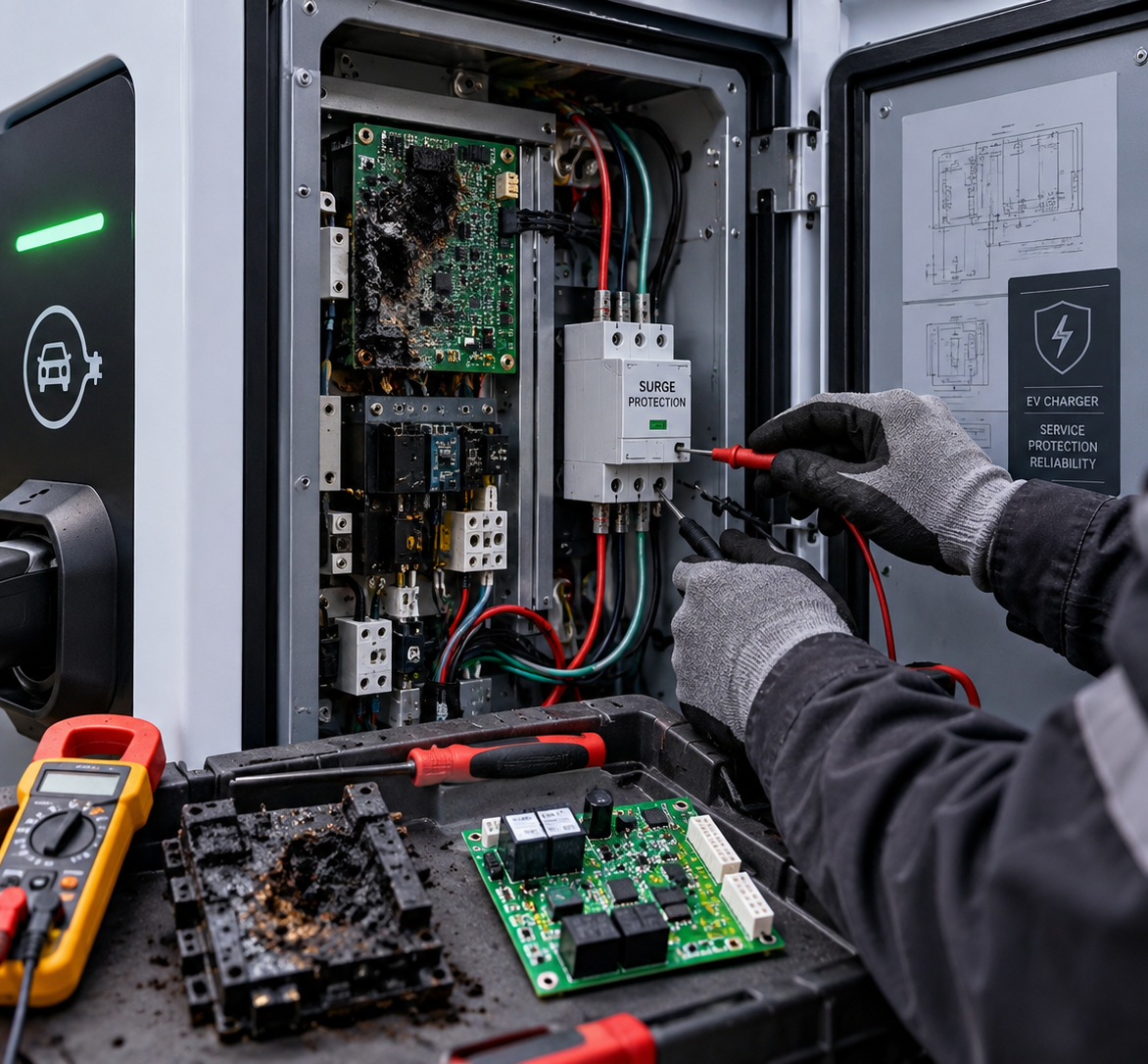
Lightning down the service line leaves a charger that powers up but refuses to negotiate with the car, or does not power up. We test the board, replace what is available, and add panel-level surge protection so the next storm passes harmlessly.
SWAP OUT
Charger Replacement
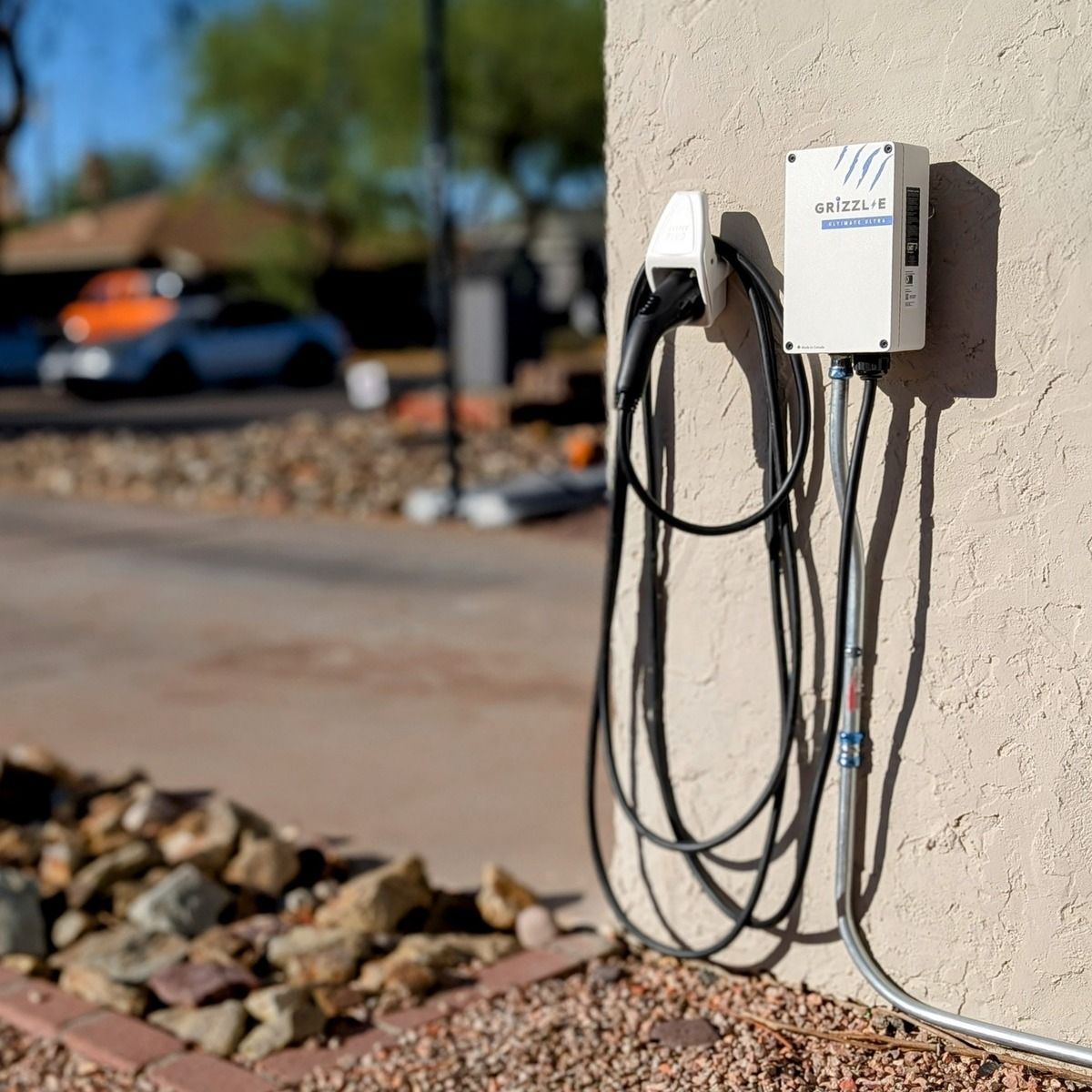
When a unit is discontinued, unsupported, or damaged beyond a board swap, we replace it with a listed charger matched to your circuit and vehicle. The existing wiring gets inspected and reused where it is sound, which keeps the job short.
UPKEEP
Preventative Maintenance
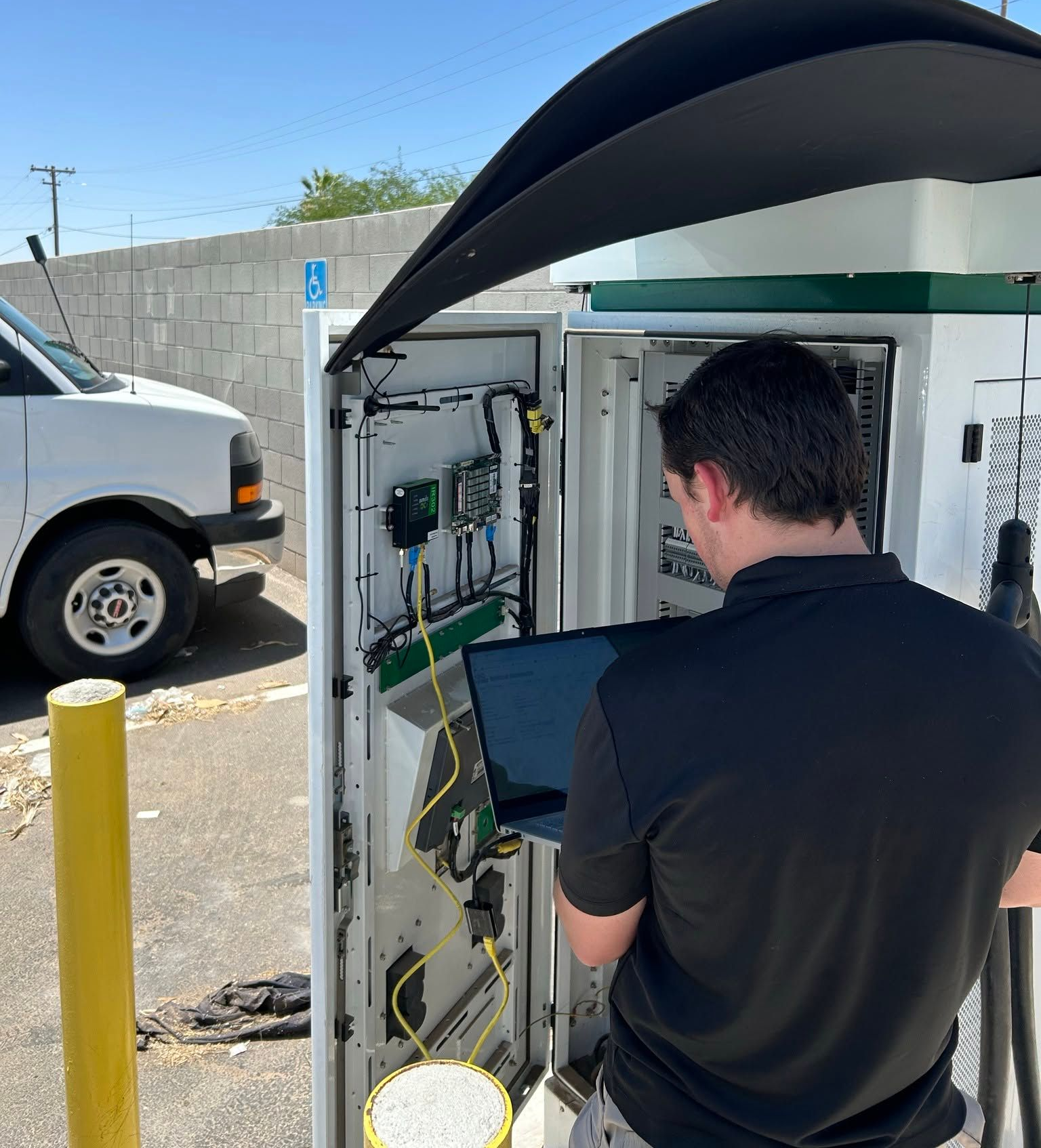
Scheduled service every 6 to 12 months includes a torque check on every connection, a full-load test, cleaning of ventilation openings, an enclosure seal check, and confirmation that surge protection still works. Fleet and multifamily sites can go on a recurring schedule.
THE WORD ON OUR WORK
WHAT OUR CLIENTS SAY.
The repair stories that get written up tend to start with a charger that had been dead for a month and a car being charged at a public station across town. Read how those visits ended for EV owners and property managers across the Valley and beyond.
Common questions
FREQUENTLY ASKED QUESTIONS.
The questions EV owners send us most often, with a photo of a blinking light attached. Answers below cover the common faults, what you can safely check yourself, and when to stop and call.
My charger stopped working. Does it need a whole new unit, or can it be fixed?
More often, a fix. We test the circuit, wiring, connections, and error history to find the actual fault instead of guessing. Replacement only comes up when a part is unsafe, unavailable, or unsupported by the manufacturer.
Why is my EV charger plugged in but not charging?
Start with the simple things: a connector not fully seated, a tripped breaker, or a charging schedule in the car or app that is delaying the session. If those check out, the fault usually sits in the charger's wiring or the vehicle.
Why is my wall connector blinking red?
A blinking red light is a fault code, and the blink count identifies the fault: typically a ground fault, a wiring problem, or overheating. Solid red means failed hardware. MaxCharged reads the code and tests the circuit at Phoenix, AZ homes and businesses.
What does a ground-fault error on my charger mean?
The charger has detected current leaking where it should not, and shut down to protect you. Moisture in the connector, worn cable insulation, a wiring fault, or the car itself are the usual causes, and the error returns until the leak is found.
How do I reset my home EV charger?
Unplug the vehicle, switch the charger's breaker off, wait about 60 seconds, switch it back on, and reconnect. If the same fault returns on the next session, stop resetting and have the circuit tested, because repeated trips signal a real problem.
Why is my EV charger not charging at full power?
Charging runs at the lowest of 3 limits: the charger's amperage, the circuit setting programmed at installation, and the car's onboard charger. Heat adds a 4th, since many units throttle output in a hot garage. Any of those can be the bottleneck.
Can a dead 12-volt battery stop my EV from charging?
Yes. The 12-volt auxiliary battery powers the charge-port latch and the modules that negotiate with the charger, so a weak one can stop a session before it starts. MaxCharged rules this out first on Phoenix, AZ service calls.
How often should a home EV charger be serviced?
An inspection every 6 to 12 months is reasonable in Arizona, where heat and monsoon moisture loosen connections and age seals faster than milder climates. No code sets an interval, but a yearly torque check and load test catch most faults early.
HOW WE WORK
FROM FAULT CODE TO FULL CHARGE, HERE IS HOW.
STEP 01
Tell Us What The Charger Shows
Send the make and model, a photo of the light pattern or app message, and when the problem started. Often we can tell you before the visit whether to expect a quick fix or a deeper repair.
STEP 02
Test The Circuit Under Load
On site we open the panel, check the breaker and every termination for heat damage, and measure voltage and current while the charger runs. The reading tells us whether the wiring, the breaker, or the unit itself is failing.
STEP 03
Isolate Charger From Vehicle
Your charger gets tested with a known-good vehicle and your vehicle with a known-good charger. That single swap settles most arguments about which side is at fault and keeps you from paying to repair the wrong one.
STEP 04
Quote The Fix In Writing
You get a written estimate that names the part or the wiring being replaced and says plainly whether repair or replacement makes more sense. Nothing is ordered or removed until you approve the scope in writing.
STEP 05
Make The Repair And Retest
Terminations get remade and torqued, damaged conductors get replaced, boards or units get swapped, and surge protection goes in at the panel where it was missing. Then the charger runs a full session on your own car.
STEP 06
Owner Sign-Off Before We Leave
The owner checks the repair before the truck pulls out, verifying torque marks, breaker sizing, and a completed charging session. If a permit was needed for new wiring, we schedule the inspection and send you the paperwork afterward.
Get Your Free Estimate
FIND OUT WHY IT STOPPED CHARGING, FREE.
Describe the fault to MaxCharged through the contact form on this site, attach a photo if you can, and we will come to your home in Maricopa County or your business anywhere in Arizona, Phoenix, AZ included, with a no-obligation estimate.
WHAT YOUR DIAGNOSIS COVERS
✓ Fault code and error history read
✓ Breaker and wiring checked under load
✓ Charger versus vehicle isolated
✓ Surge protection status confirmed
✓ Repair or replace recommendation in writing
✓ Estimate with no obligation