
EV Charger Installation
EV CHARGER INSTALLATION IN Phoenix, AZ
A 48-amp charger needs a 60-amp breaker and a 40-amp charger needs a 50-amp one, because the National Electrical Code treats EV charging as a continuous load and sizes the circuit at 125% of the charger's rating. MaxCharged handles EV charger installation in Phoenix, AZ for homes and businesses: the site survey and load calculation, the dedicated 240-volt circuit, the charger, surge protection at the panel, and the permit and inspection that close the job. Tesla-certified, licensed and insured, ROC #CR11-346079.
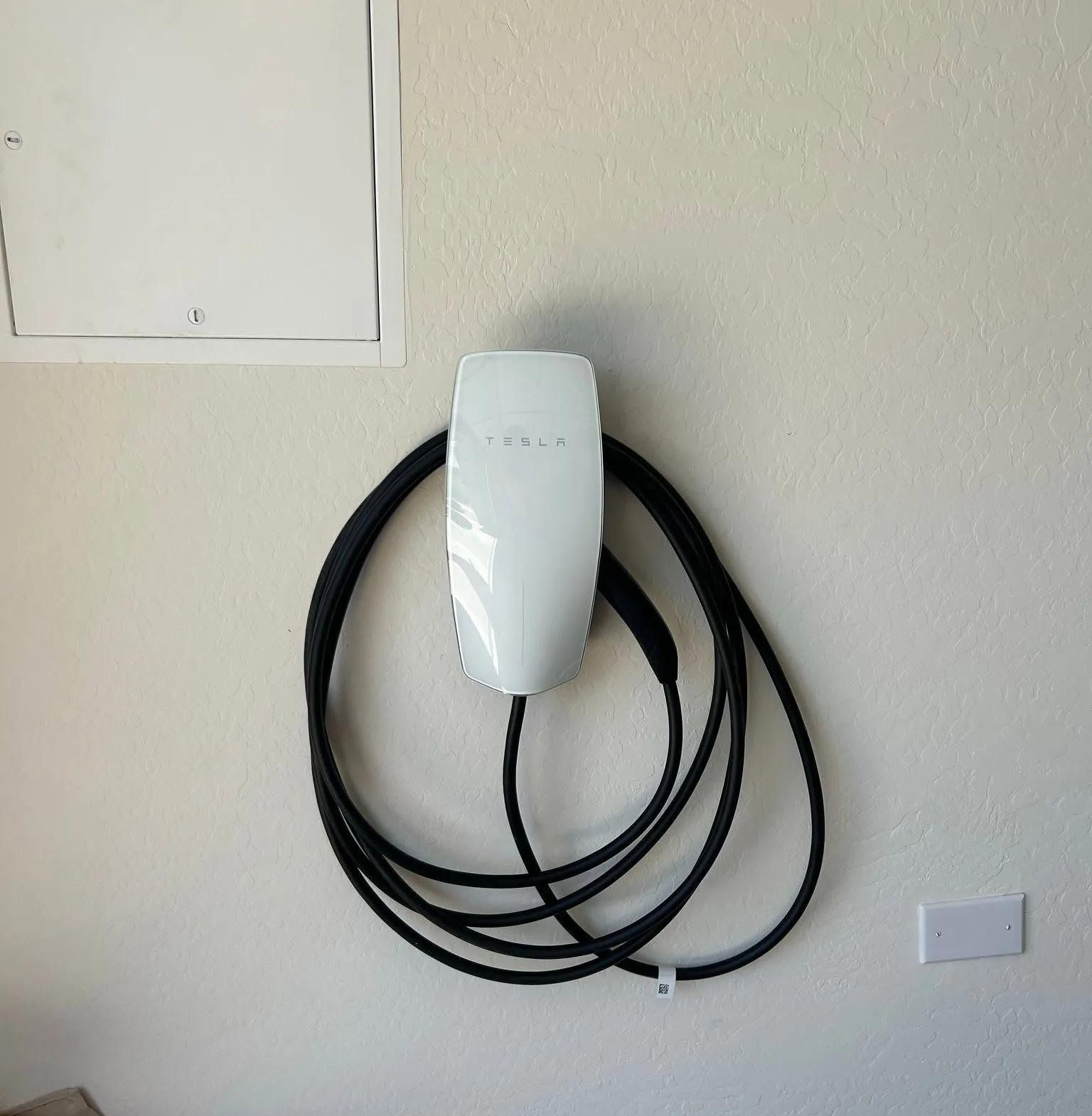
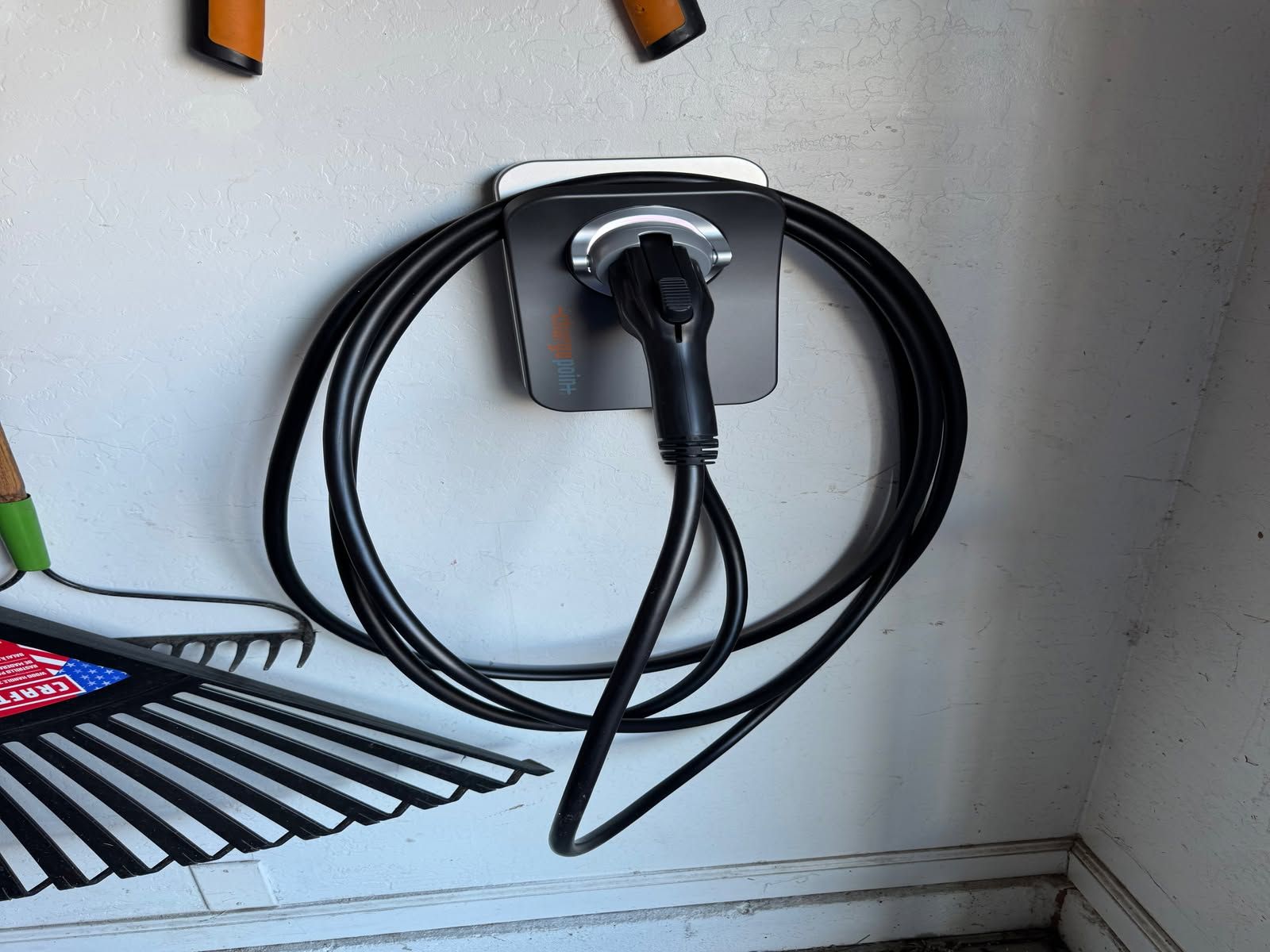
THE CIRCUIT MATTERS MORE THAN THE CHARGER.
Most chargers on the market will do the job. What separates a good installation from a callback is everything behind the faceplate: a breaker sized to the continuous-load rule, wire rated for the heat it lives in, lugs torqued to spec, and conduit kept out of the afternoon sun. We spend our time on those parts, because that is where installs fail.
Every job starts with an open panel and a load calculation, not a sales pitch. You hear what the service can carry, what it cannot, and which fix makes sense before anything gets ordered.
✓ Circuits sized to the 125% rule
✓ Permit and inspection handled
✓ Any charger brand, Tesla-certified
✓ Free on-site survey and estimate
EV CHARGER INSTALLATION
PHOENIX GARAGES PUNISH SHORTCUTS.
A charger hanging on a west-facing garage wall in July sits in air far hotter than anything in the manufacturer's test lab, and the wire feeding it crosses an attic that is hotter still. We plan around that: conduit routed through the coolest path the building allows, conductors sized with heat in mind, the unit mounted where the sun does not land after lunch. Ignore the thermometer and the install becomes a repair.
PHOENIX PULLS PERMITS UNDER THE 2023 CODE. SO DO WE.
Since August 1, 2025, the City of Phoenix has enforced the 2023 National Electrical Code, and a new 240-volt EV circuit needs a permit and an inspection under it. Applications run through the city's SHAPE PHX portal, and the inspector checks the breaker, the conductors, and the mounting before signing off. In Phoenix, AZ, we file the day after your approval, meet the inspector, and hand you the completion certificate.
10 YEARS OF WIRING GARAGES FOR THE CARS THAT LIVE IN THEM.
We have spent 10 years running 240-volt circuits to garages, carports, and parking lots, first for the early Teslas and now for everything from a Lucid to a fleet of work vans. That history shows up in small ways: wire sized for the attic it crosses, a charger placed where the cable reaches the port, an HOA that never hears about the conduit. Want to see how that plays out on your property?
WHY CHOOSE US FOR EV CHARGER INSTALLATION.
Circuits Sized To Code, Not The Box
The label on a charger tells you what it draws. The code says what the circuit needs, and those are not the same number. Every breaker and conductor we install follows the continuous-load rule, so the charger runs at full rate for hours.
One Survey Answers Every Question
Before a number is quoted, we open the panel, add up what the building already draws, and confirm what is left. You learn whether a plain install, a load-management device, or a bigger service is the right call, and why.
Any Brand, Tesla-Certified
Tesla certification means Tesla trained and approved us to install the Wall Connector. It does not mean we only hang Teslas. Autel, Wallbox, Lucid, ChargePoint, Blink, and any other listed charger goes on the wall with the same care.
Heat Figured Into Every Run
Conductors, conduit, and enclosures all age faster in the desert. We route wire through the coolest path available, pick materials rated for the ambient temperature the equipment will live in, and keep the charger out of the afternoon sun wherever parking permits.
Permits Handled, Not Hinted At
Some installers leave the permit as a homework assignment. We start the application the day after you approve the estimate, schedule the inspection, meet the inspector, and hand over the certificate of completion, so the job is documented for a future sale.
A Walkthrough Before We Leave
Nobody should have to learn a charger from a pamphlet. Once the unit is live, we run a test charge on your vehicle, show you the app, the scheduling features, and the cable, and answer the first-week questions before the first week arrives.
WHAT WE INSTALL
OUR EV CHARGER INSTALLATION WORK
Six pieces make up a complete installation, and the survey shows which ones your property needs. A newer build with a 200-amp service may need 3. An older home with a full panel may need all 6.
LEVEL 2
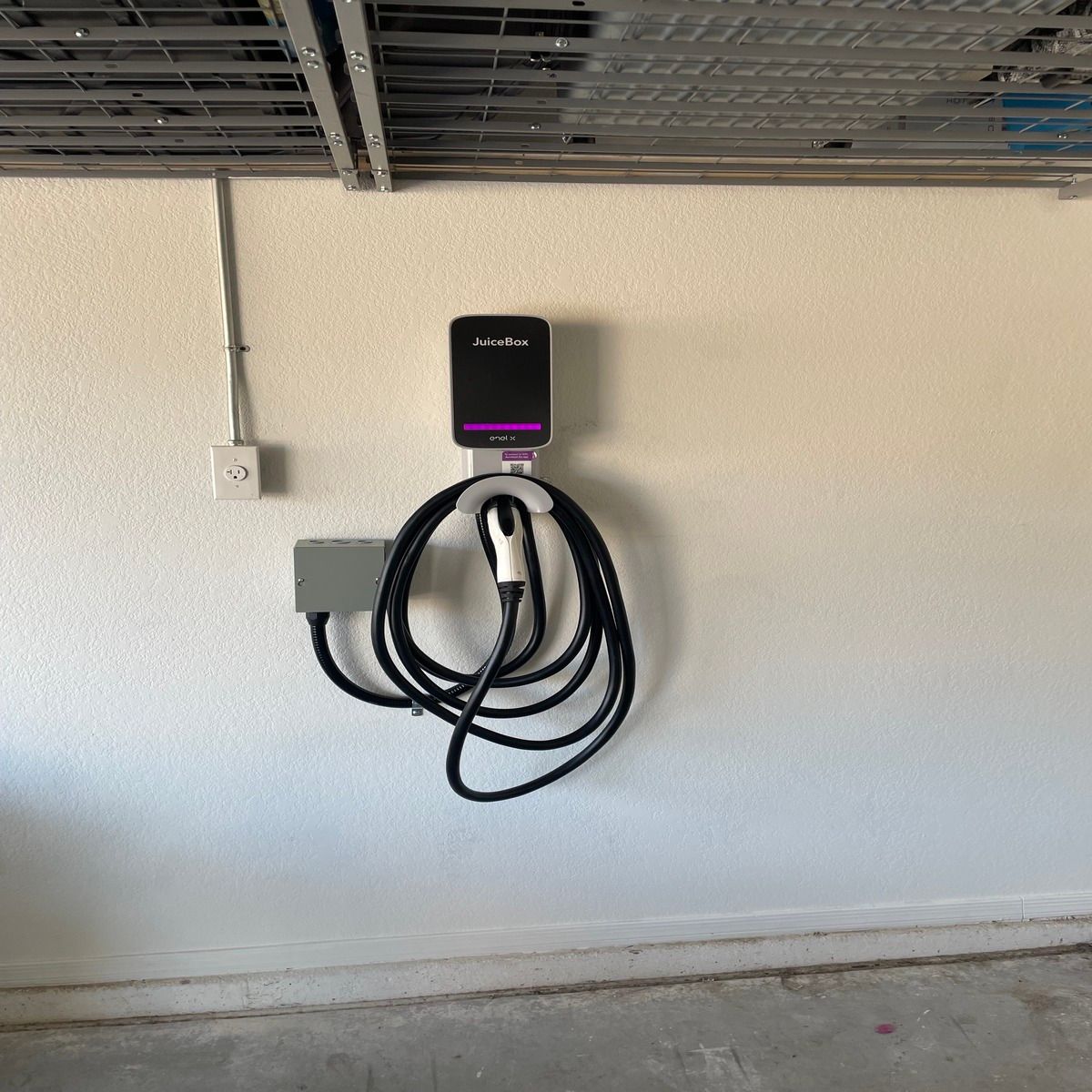
Level 2 Charger Installation
Level 2 charging on a 240-volt circuit typically adds 25 to 30 miles of range per hour, enough to refill most commutes overnight. We mount the unit, run the circuit, connect it, and finish with a test charge on your own vehicle.
NEW CIRCUITS
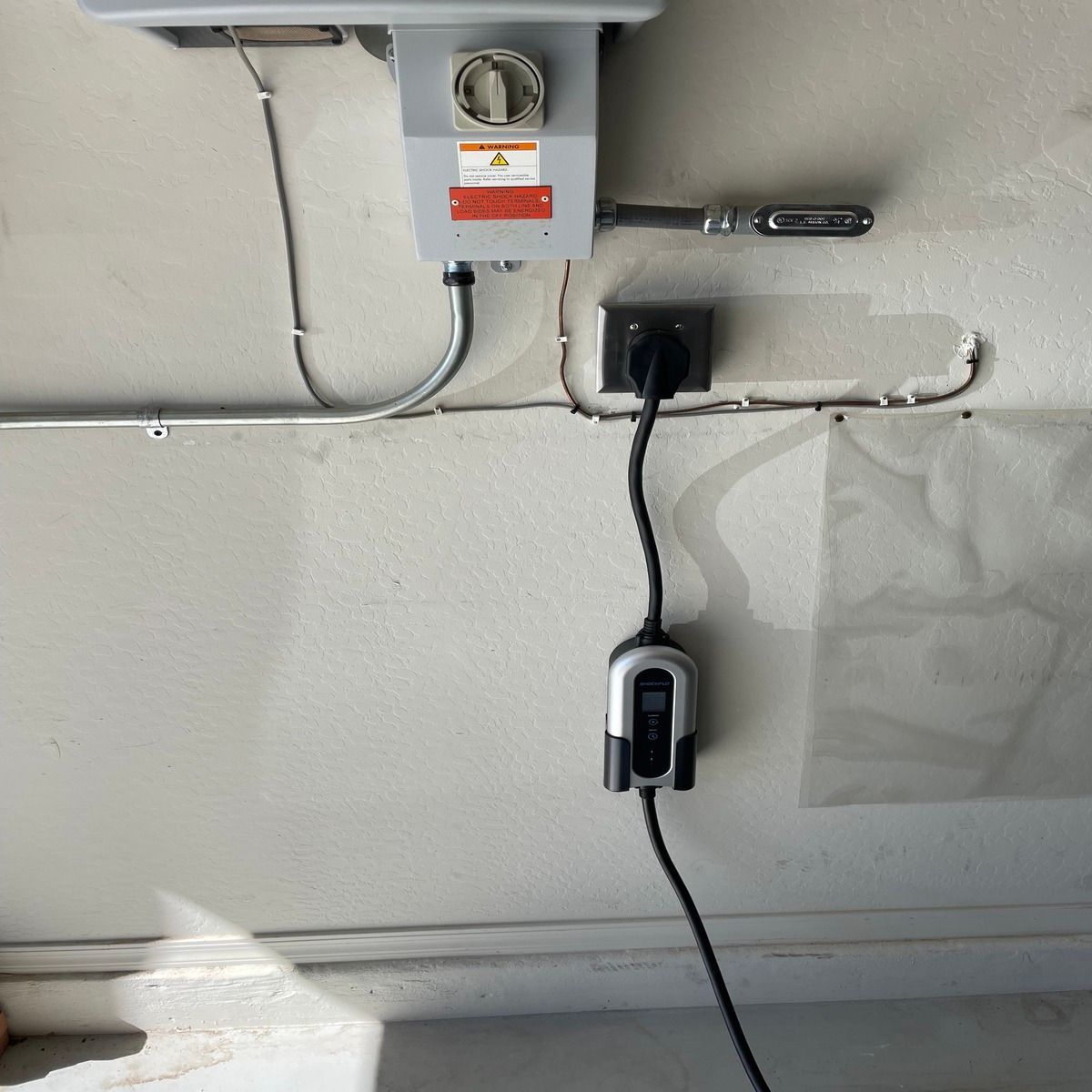
Dedicated 240-Volt Circuits
A charger gets its own breaker and wire, and nothing else rides on it. We size the run to the charger's rating, pull it through attic or conduit on the cleanest route, torque the terminations, and label the breaker for the next electrician.
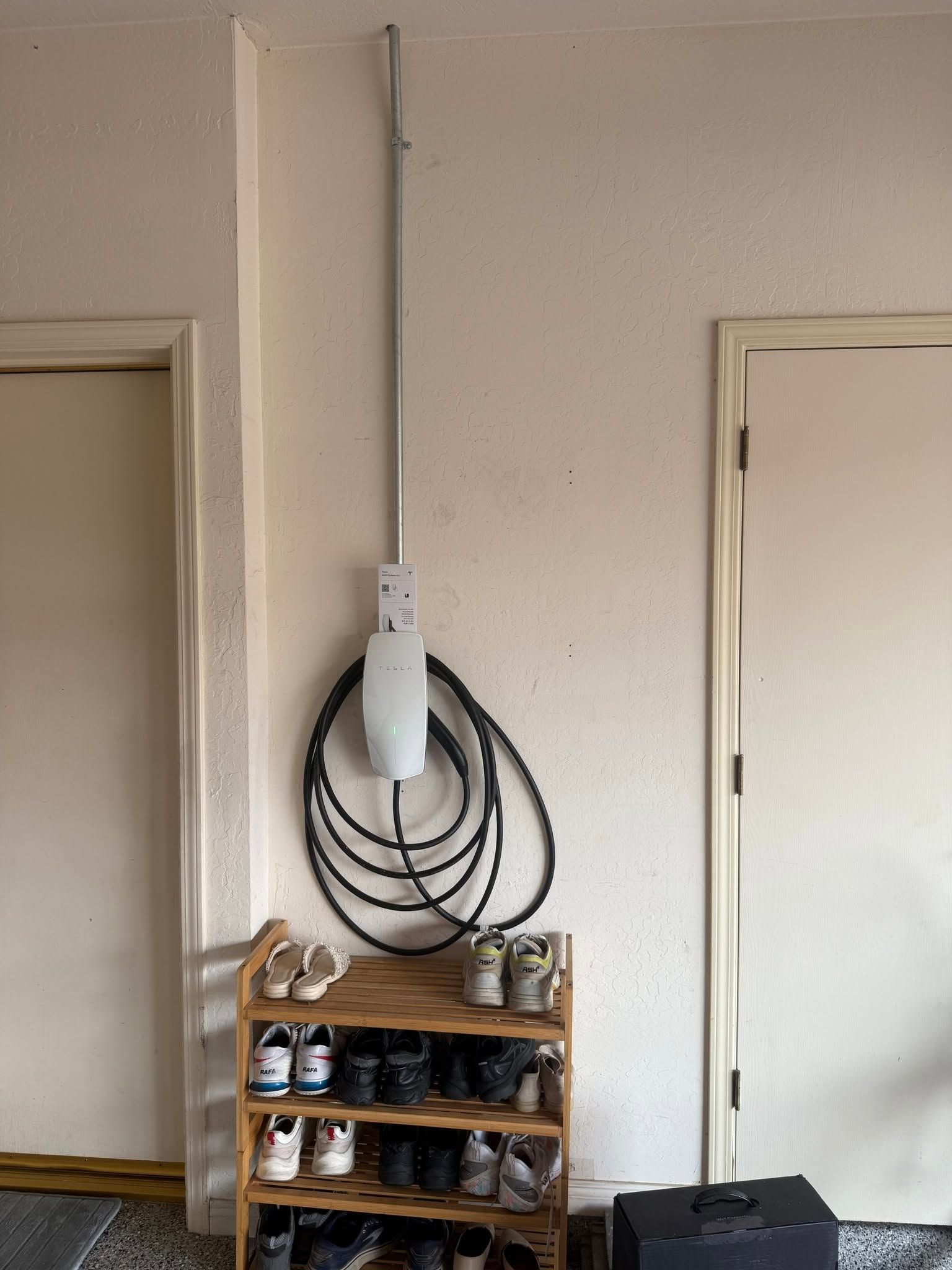
TESLA
Tesla Wall Connector Installation
The Wall Connector delivers up to 48 amps on a 60-amp circuit and can share power with a second unit for two-car households. As a Tesla-certified installer we mount it, commission it, and configure the amperage to match what your panel can supply.
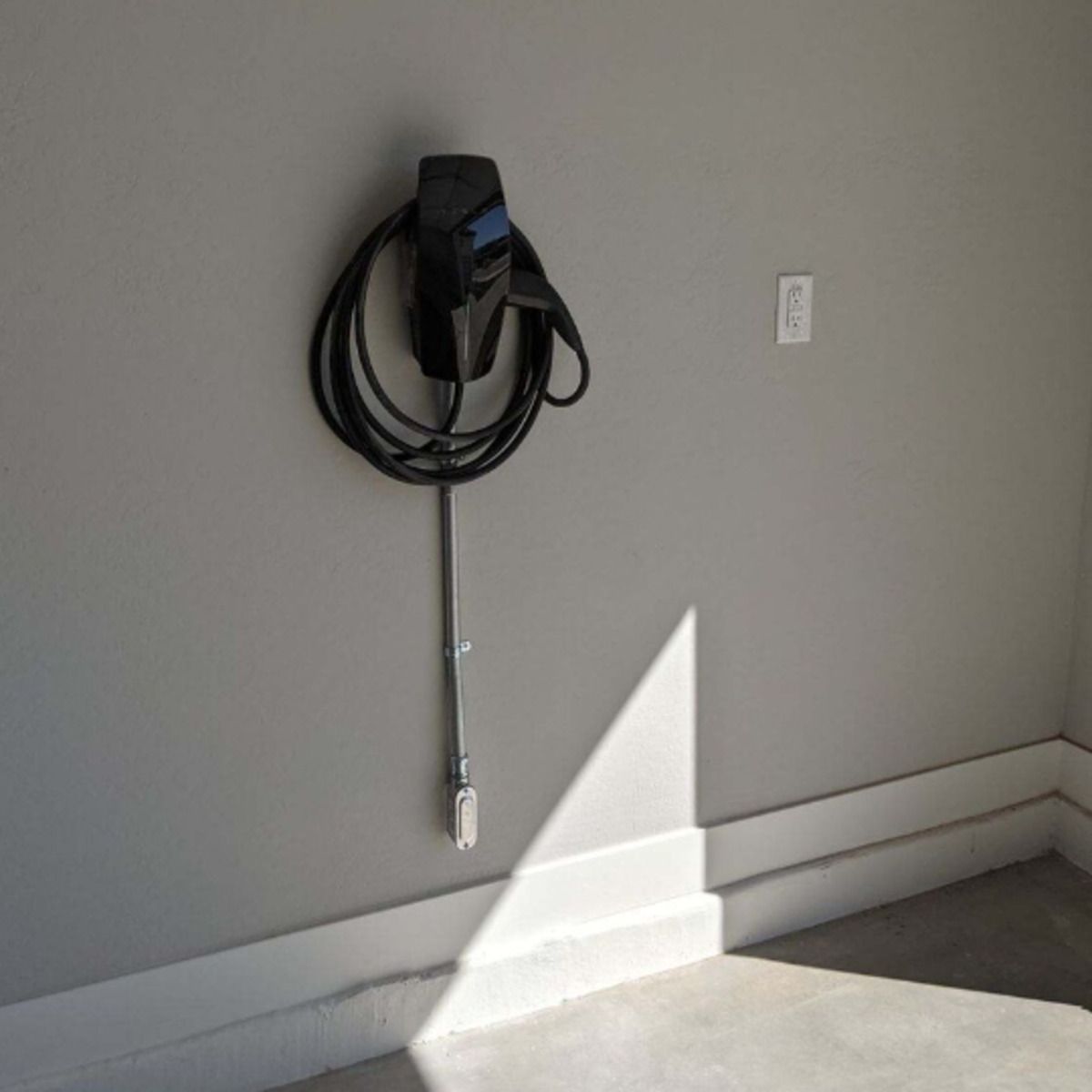
LOAD CHECK
Load Calculations and Load Management
Air conditioning, a pool pump, an electric range, and a dryer already claim a share of your service. A load calculation adds the charger to that list and tells us whether it fits. When it does not, a load-management device caps the charger.
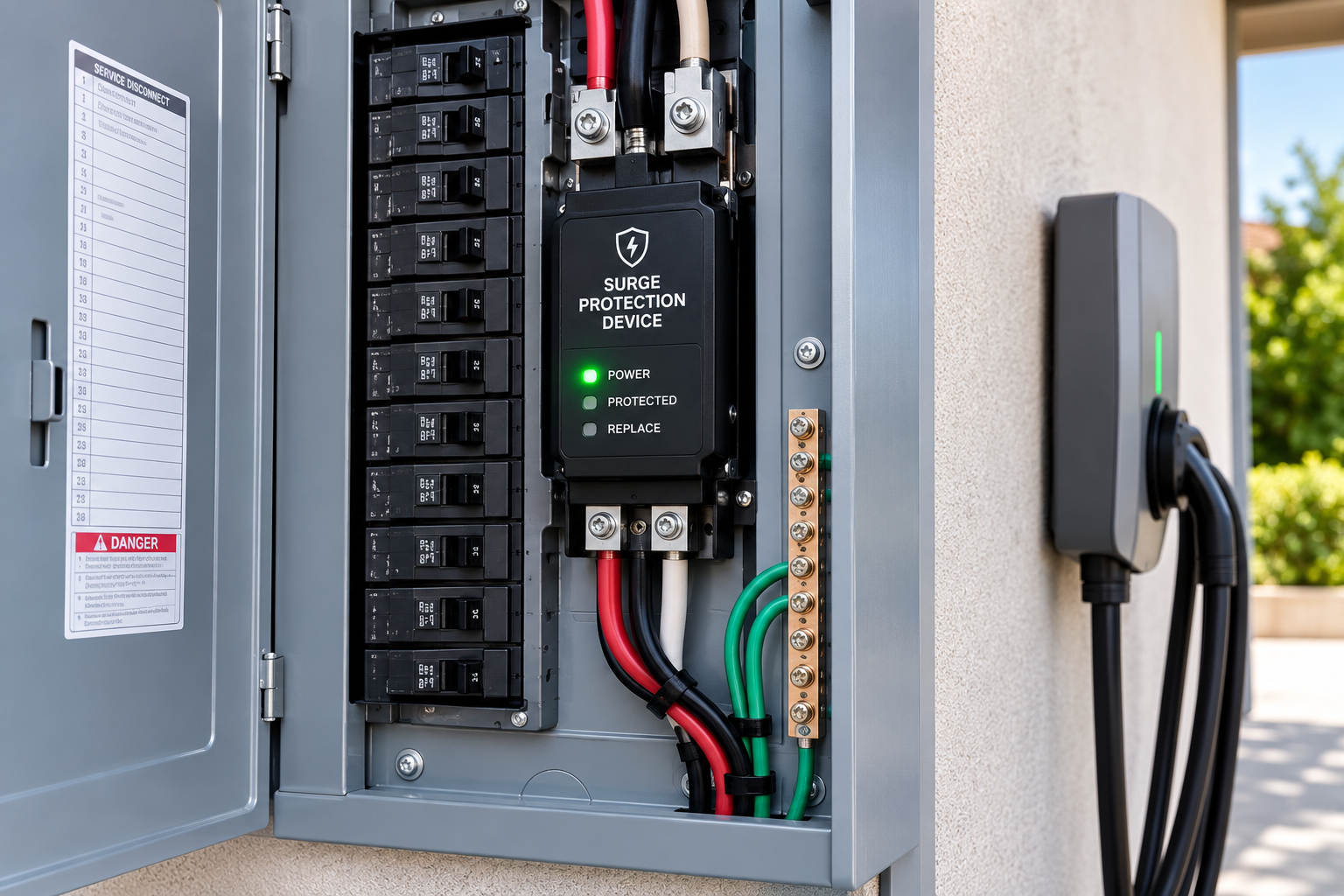
SURGE GUARD
Surge Protection for Chargers
Monsoon lightning and grid switching send spikes down the line, and a charger's control board is an expensive thing to lose to one. A surge protective device at the main panel clips those spikes before the branch circuit sees any of it.
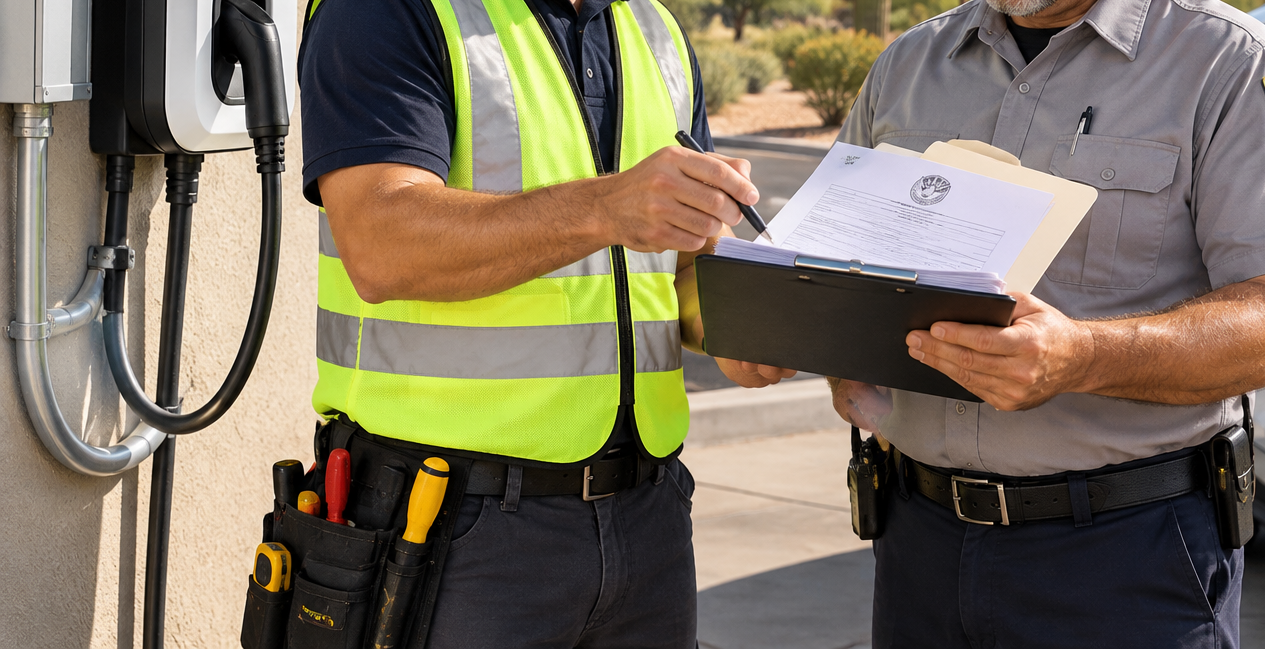
PERMITS
Permit and Inspection Coordination
Paperwork is part of the electrical work. We prepare the application, submit it to the city, track the review, and schedule the inspection once the charger is live. You get the approved permit and a certificate of completion without chasing anyone.
THE WORD ON OUR WORK
WHAT OUR CLIENTS SAY.
People who write about us tend to skip the wiring and talk about the day itself: the survey that explained the panel in plain terms, the permit that moved without a reminder, the conduit painted to match the stucco. The reviews cover what a spec sheet cannot.
Common questions
FREQUENTLY ASKED QUESTIONS.
Questions like these come up on nearly every site survey, from breaker sizes and dryer outlets to what happens after the inspector leaves. Bring the rest to the survey itself.
What happens if I skip the permit on a new charger circuit?
Skipping it risks trouble at resale or with insurance. Phoenix, Scottsdale, Chandler, Mesa, and Maricopa County all require approval for a 240-volt circuit. MaxCharged files the application, meets the inspector, and hands you the completion certificate once it passes.
How many amps does a home EV charger need?
It depends on the charger, but the circuit is always 125% of its rating because EV charging counts as a continuous load. A 40-amp charger sits on a 50-amp breaker, a 48-amp charger on a 60-amp, and a 32-amp unit on a 40-amp.
Where is the best place to install an EV charger at home?
Close to the panel and close to where the car actually parks, with the cable reaching the charge port without crossing a walkway. In Phoenix, AZ, MaxCharged also favors the shadiest wall available, since enclosures and cables age faster in direct sun.
How long does a Level 2 EV charger installation take?
Most residential installs take 4 to 6 hours, covering the mounting, the circuit, the breaker, and a test charge. Long conduit runs, masonry walls, or panel work stretch that, and the permit review adds calendar days before and after the visit itself.
Can I use my existing dryer outlet for EV charging?
Not as a permanent setup. A dryer circuit is shared, usually sits in the laundry room rather than the garage, and a receptacle used for EV charging needs GFCI protection under current code. A dedicated circuit at the parking spot is safer.
Are EV charging stations universal across vehicle brands?
Mostly. Level 2 chargers use the J1772 connector, which fits nearly every non-Tesla EV, and Tesla vehicles use a simple adapter. A Tesla Wall Connector can serve other brands with an adapter, so one charger can outlast the car you own today.
What training do I get after my charger is installed?
After the test charge, MaxCharged walks you through the charger's features, app scheduling, cable care, and the maintenance habits that matter in Phoenix, AZ heat. You also receive a certificate of completion once the installation passes its final inspection.
Do I still need a charging station if I already have a 240-volt outlet?
Yes. The outlet only supplies power; the charging station, or the portable connector that came with the car, handles ground-fault protection and talks to the vehicle to set the charge rate. The outlet also has to sit on a dedicated, GFCI-protected circuit.
Common questions
FREQUENTLY ASKED QUESTIONS.
Questions like these come up on nearly every site survey, from breaker sizes and dryer outlets to what happens after the inspector leaves. Bring the rest to the survey itself.
Can my EV charger be installed outdoors instead of inside a garage?
Many chargers are designed for outdoor use when installed according to their environmental ratings. Proper placement, weather protection, electrical connections, and cable management are especially important in Phoenix's sun and seasonal storms.
Will installing a home EV charger increase my electricity bill significantly?
Charging increases electricity consumption, but the impact depends on driving distance, vehicle efficiency, charging frequency, and utility rates. Reviewing your electricity plan and available off-peak rates can help manage ongoing costs.
Can I use solar panels to charge my electric vehicle at home?
Yes. A home solar system can supply electricity for EV charging, although actual savings depend on solar production, household usage, charging schedules, and whether grid electricity is needed when sunlight is limited.
How long does professional EV charger installation usually take?
Straightforward installations may take several hours, while projects requiring panel upgrades, long wiring runs, or permitting can take longer. A site evaluation helps establish a realistic timeline for your property.
What should I consider when choosing an EV charger for a future electric vehicle?
Consider connector compatibility, charging power, smart features, cable reach, and electrical capacity. If you expect to change vehicles, select equipment compatible with your likely needs without paying for unnecessary charging capacity.
Is it safe to install an EV charger myself instead of hiring an electrician?
EV charger installation can involve high electrical loads, dedicated circuits, grounding, and code requirements. Professional installation helps ensure the system is appropriately sized, safely connected, and compliant with applicable local regulations.
What should I expect during an EV charger installation appointment with MaxCharged in Phoenix, AZ?
An installation typically involves assessing the electrical panel, selecting the charger location, reviewing wiring requirements, and completing the electrical connection. Confirm permitting, testing, setup, and final inspection arrangements with MaxCharged beforehand.
HOW WE WORK
FROM SITE SURVEY TO CERTIFICATE, HERE IS HOW.
STEP 01
Survey The Site And The Panel
We come out, look at where the car parks, open the panel, and run a load calculation. The estimate comes out of that visit, not a phone guess, and you see the route the circuit will take before agreeing to anything.
STEP 02
Pull The Permit
Once you approve the estimate, the permit application goes in the next day. Review times depend on the city, from a few days to a few weeks, and we track it so the install date is set the moment approval lands.
STEP 03
Run The Circuit
Installation starts within 2 days of an approved permit. We mark the work area, run the conductors along the planned route, set the breaker, and torque every termination to the manufacturer's figure before the charger touches the wall.
STEP 04
Mount And Commission The Charger
The unit goes up at the manufacturer's clearances, gets wired, configured to the amperage your panel supports, and run through a test charge on your vehicle. Exposed conduit is painted to match the building when materials are on hand.
STEP 05
Owner Inspection Before Departure
The owner inspects the finished work in person before we pack up: terminations, labeling, mounting, cleanup, and the charging session on your car. Then we walk you through the charger, the app, and what routine care looks like in this climate.
STEP 06
Pass Inspection And Close Out
We schedule the city inspection, meet the inspector on site, and answer any questions about the circuit. When the job passes, you get the certificate of completion, the approved permit, and a labeled breaker that tells the story.
Get Your Free Estimate
GET THE CIRCUIT SIZED RIGHT, FREE.
Tell MaxCharged where the car parks and where the panel sits, and we will come out, run the numbers, and hand you a written estimate. No charge for the visit anywhere in Phoenix, AZ, no pressure afterward. Start with the contact form.
WHAT YOUR SITE SURVEY COVERS
✓ A breaker-panel check and load calculation
✓ The best charger location for your parking
✓ Conduit route, planned around the sun
✓ Charger options for your vehicle
✓ Permit and inspection timeline
✓ A written estimate, no obligation