
Commercial EV Charging Stations
COMMERCIAL EV CHARGING STATIONS IN Arizona
A single commercial Level 2 charger draws 40 to 80 amps, and in Arizona a charger bank goes through a Minor Site Plan review before the building permit is issued. MaxCharged installs commercial EV charging stations in Arizona: multi-port Level 2 banks, DC fast-charge sites, fleet depots, networked Tesla, Blink, and ChargePoint equipment, utility coordination with APS or SRP, and conduit laid for the ports you will add later. Licensed and insured under Arizona ROC #CR11-346079.
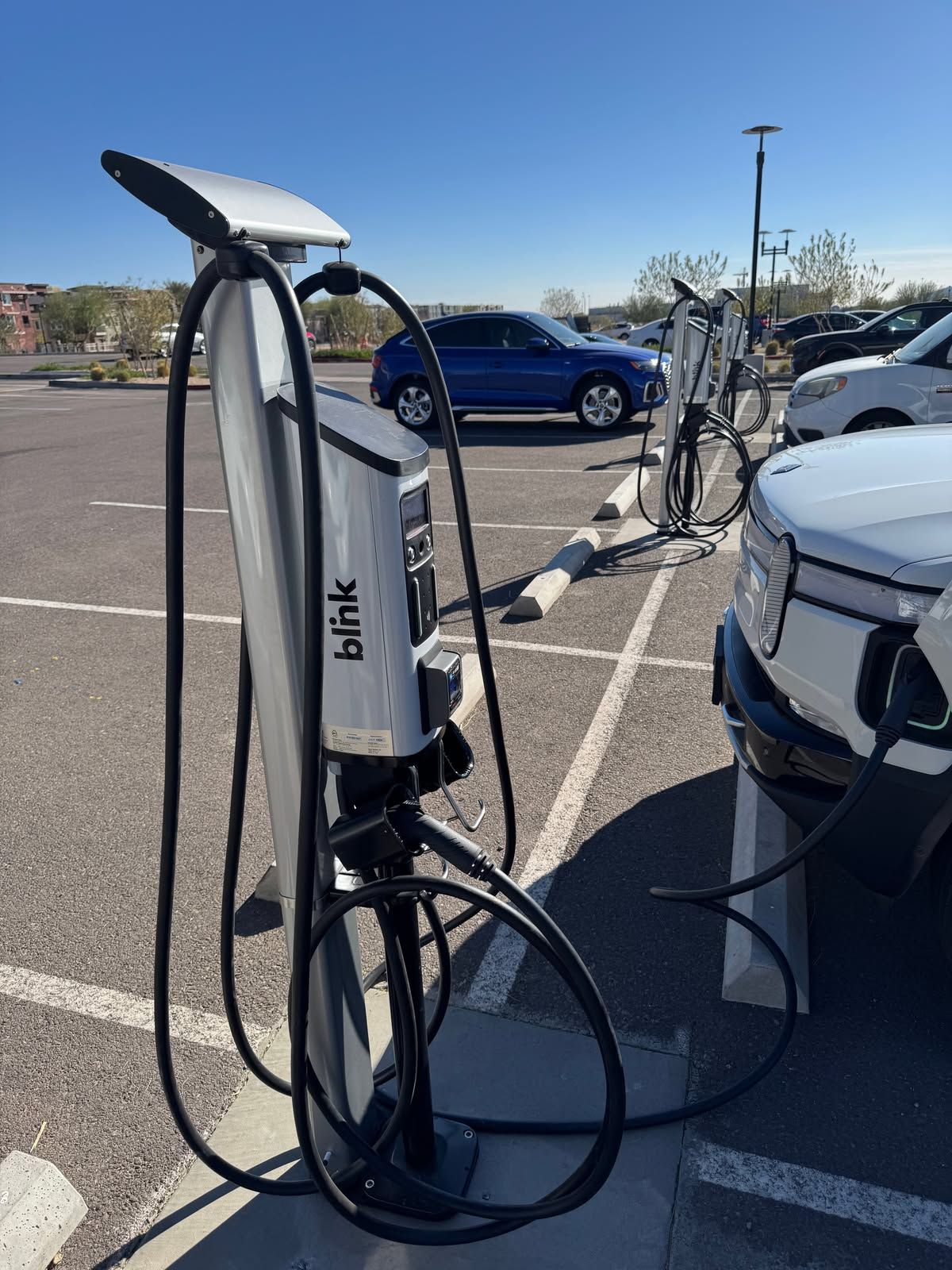
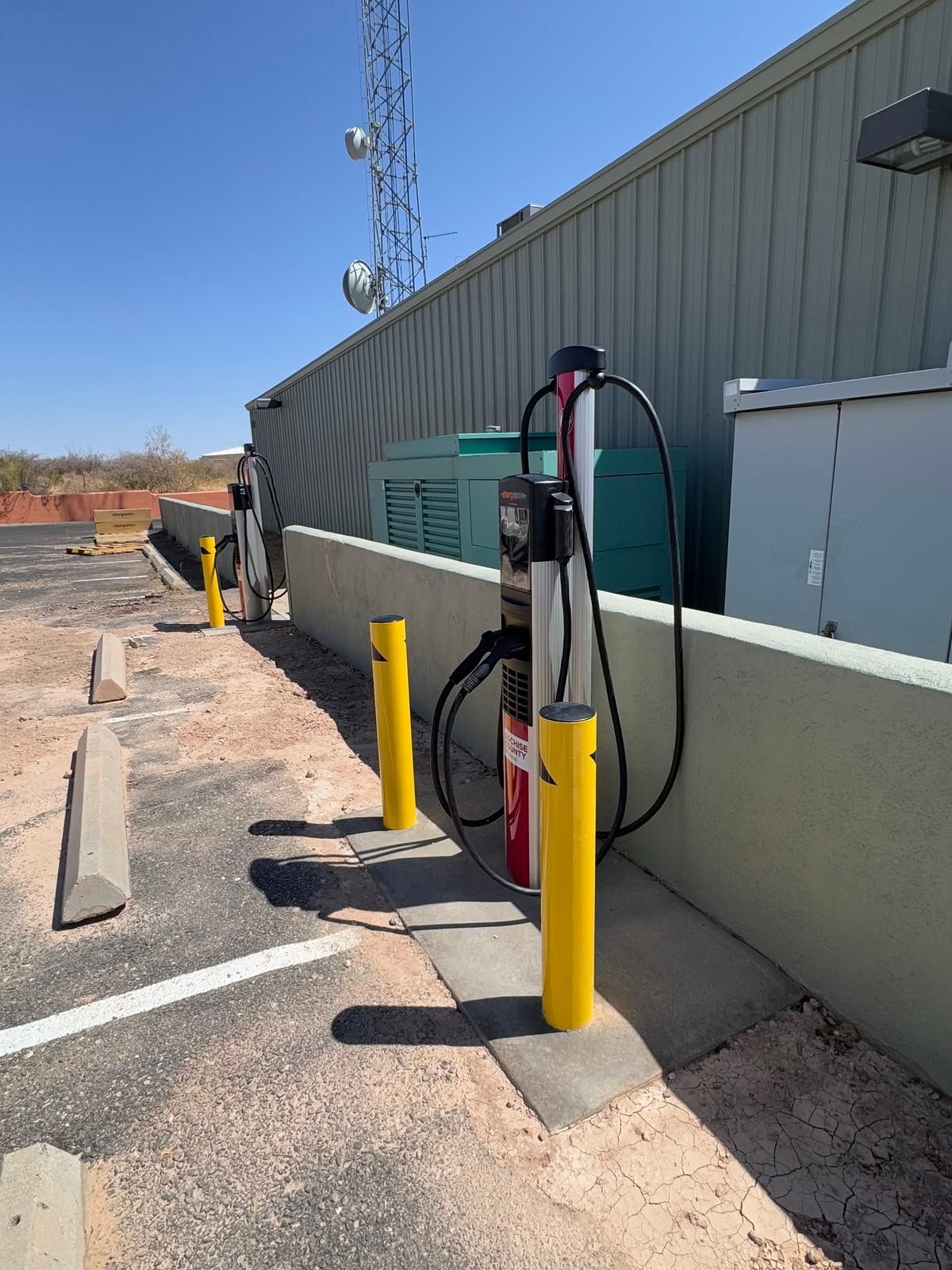
THE PARKING LOT IS AN ELECTRICAL PROJECT FIRST.
Chargers are the visible part. Underneath sits a feeder sized for 6 or 8 continuous loads, a panel with room to grow, a transformer the utility may need to upsize, and a trench across a lot customers still need. We plan the electrical side first, because that is where a commercial project either fits the budget or blows past it.
Property managers, general contractors, and fleet operators each get a scope written in plain terms: what the service can carry today, what needs upgrading, and how many ports the site can add later without a second trench.
✓ Multi-port Level 2 and DC fast
✓ APS and SRP coordination handled
✓ Permits and site plan review filed
✓ Statewide across Arizona
COMMERCIAL EV CHARGING STATIONS
ARIZONA LOTS BAKE THE EQUIPMENT ALL DAY.
A pedestal charger in an open lot has no garage roof to hide under. Asphalt radiates heat back at the enclosure, conduit runs sit in full sun, and a cabinet built for a milder climate sees temperatures its manufacturer never planned for. We specify shade orientation where the layout allows, UV-stable conduit, and conductors sized for the ground beneath the pavement, so the station charges at rate on the hottest day.
4 TO 12 WEEKS FROM SURVEY TO LIVE, IF THE PAPERWORK IS RIGHT.
In Arizona, a commercial charging permit takes 1 to 3 weeks once the Minor Site Plan review clears, and the APS or SRP queue can add another 2 to 8 weeks, so 4 to 12 weeks from survey to live is typical. Timing is money too: SRP pays $2,500 per networked Level 2 port for installs completed by April 30, 2027, and that window does not wait.
WE HAVE SAT THROUGH THE PERMIT MEETINGS SO YOU DO NOT HAVE TO.
Over 10 years of EV charger work we have learned which questions a plan reviewer asks, what the utility wants on a load letter, and how an inspector reads an accessible parking layout. Those meetings are dull, and one missing detail can cost a month. We attend, we answer, and we get the reviewer what is missing that week, so your project keeps moving. Ready to see what your lot can support?
WHY CHOOSE US FOR COMMERCIAL EV CHARGING STATIONS.
Designed Around The Service You Have
Adding 8 ports to a building near its rated load is how projects stall. We read the existing service, run the load calculation, and show you which port count fits now and what a utility upgrade would unlock, before any equipment is ordered.
Rebates Chased On Your Behalf
Utility rebates come with paperwork, deadlines, and approved equipment lists. We build the design around qualifying networked hardware and document the install the way the program requires, so your application has what it needs before the deadline instead of after it.
Tenants Keep Parking During Construction
Trenching across a live lot means lost spaces and unhappy tenants if nobody plans the phasing. We stage the work so entrances, drive lanes, and accessible stalls stay open, and we schedule the noisy parts around your hours of business.
Accessible Stalls Laid Out Right
An accessible charging space needs room for a wheelchair lift, an aisle to reach the connector, and controls a seated driver can operate. We lay out stalls to the Access Board guidance so the inspection passes and every driver can plug in.
Conduit For The Ports You Add Later
The cheapest port to install is the one whose conduit is already in the ground. Every project we design leaves spare raceway, panel space, and breaker positions for the next round, so expanding later means pulling wire instead of cutting pavement again.
One Contact From Survey To Switch-On
Commercial charging touches the city, the utility, the network provider, and your general contractor. You get a single point of contact who manages all 4, sends you the schedule, and tells you the moment the timeline moves in either direction.
WHAT WE BUILD
OUR COMMERCIAL EV CHARGING STATIONS WORK
Retail centers, office parks, apartment communities, hotels, and fleet yards each need a different mix of the services below. A site survey sorts out which apply, and the estimate prices each separately so you can phase the project.
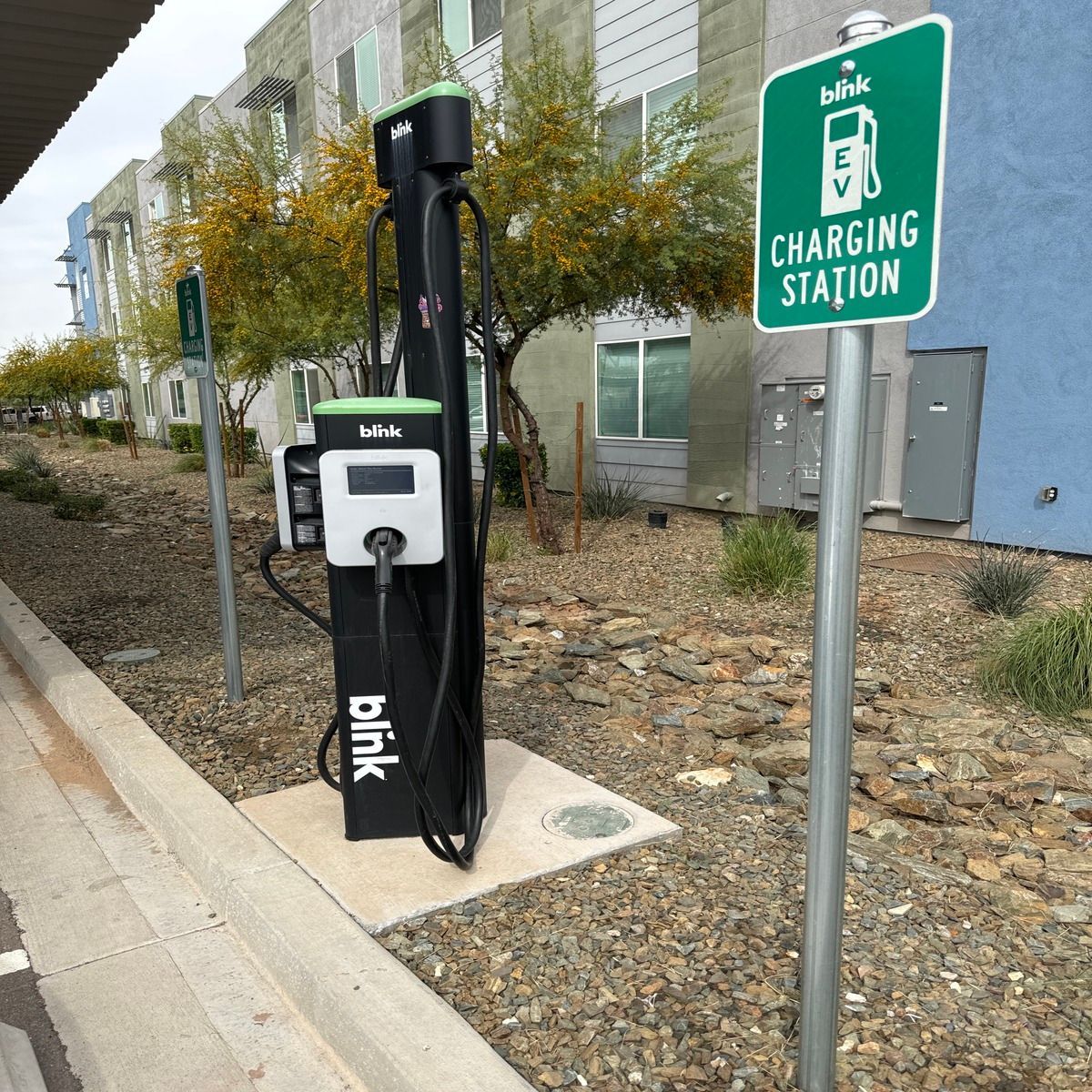
MULTI PORT
Multi-Port Level 2 Stations
Banks of dual-port pedestals or wall units on 208 or 240 volts suit workplaces, shopping centers, and multifamily lots where cars sit for hours. We size a feeder for the whole bank, add load management where service is tight, and mount for shade.
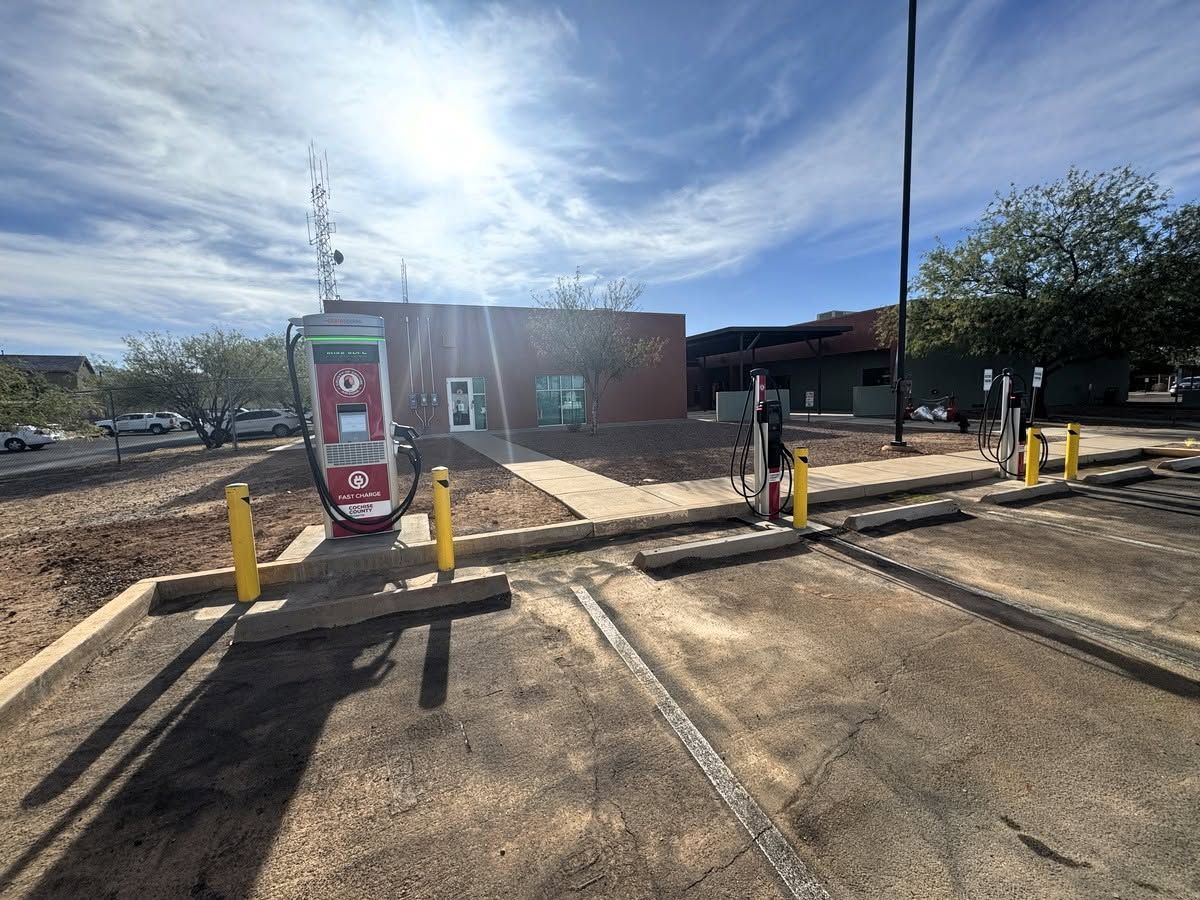
FAST CHARGE
DC Fast Charging Sites
Highway-adjacent retail, hotels, and fleet depots that need a car back on the road fast get 50 to 350 kW units that reach 80% in 20 minutes to an hour. The electrical work is heavier: a dedicated transformer, switchgear, and a demand-charge plan.
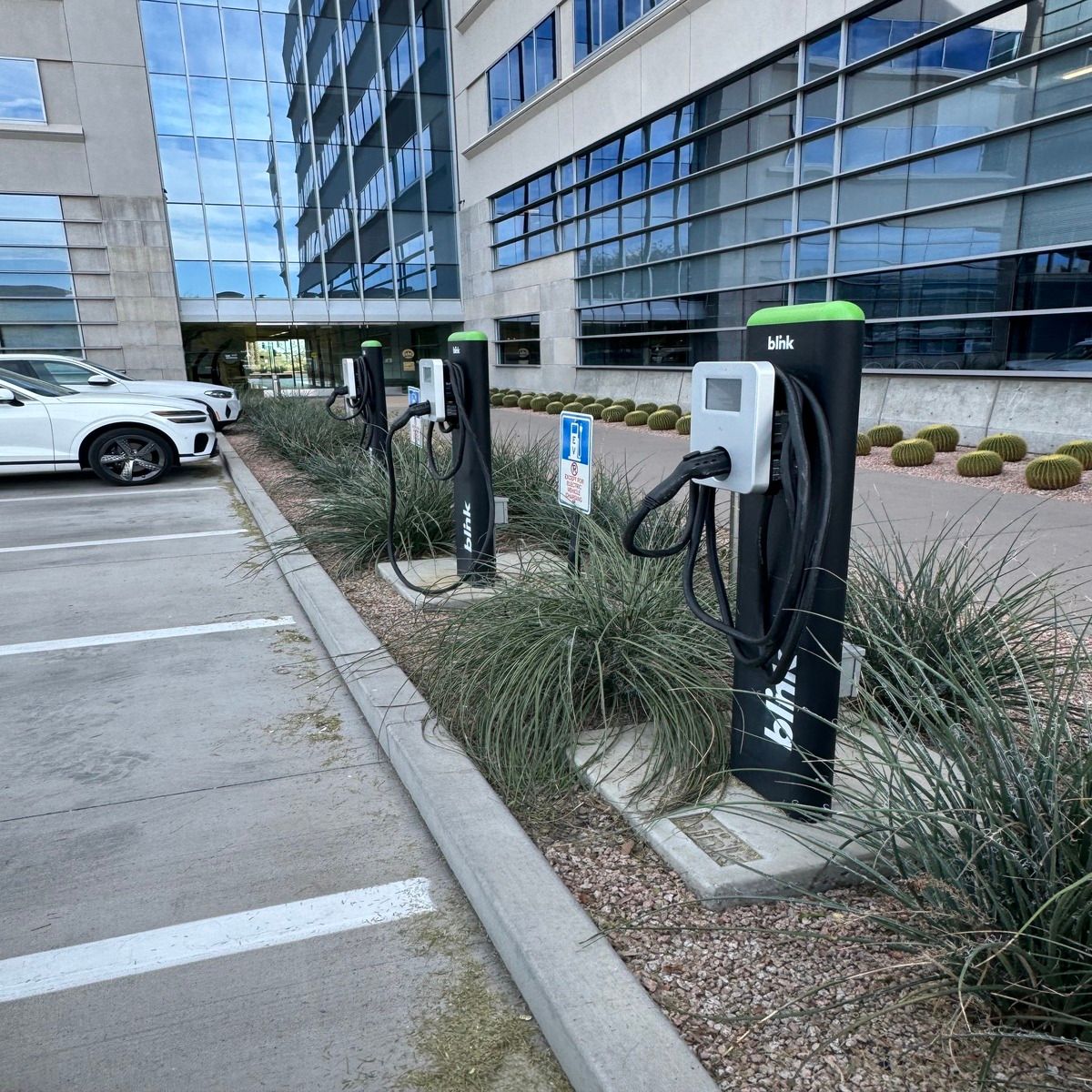
FLEETS
Fleet Depot Charging
Delivery vans, service trucks, and pool vehicles that return nightly need overnight Level 2 at every bay, sequenced so the whole yard charges without tripping the main. We design the depot around your routes, dwell times, and the vehicles you plan to add.
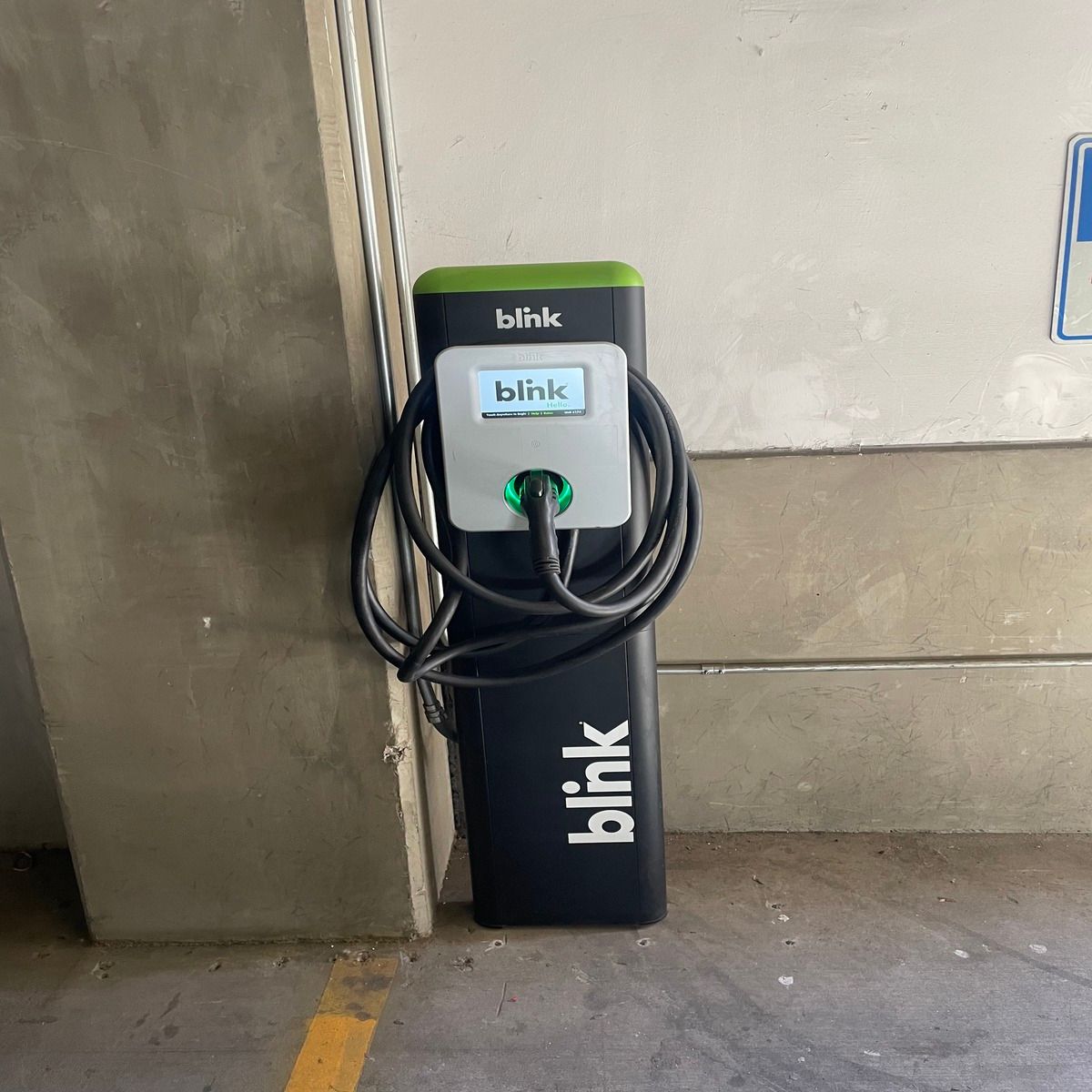
NETWORKED
Networked Charging Setup
ChargePoint, Blink, and Tesla commercial units come alive on a network that lets you set prices, restrict access to tenants or employees, and pull usage reports. Commissioning covers the cellular or Ethernet link, the owner account, and the rate schedule you choose.
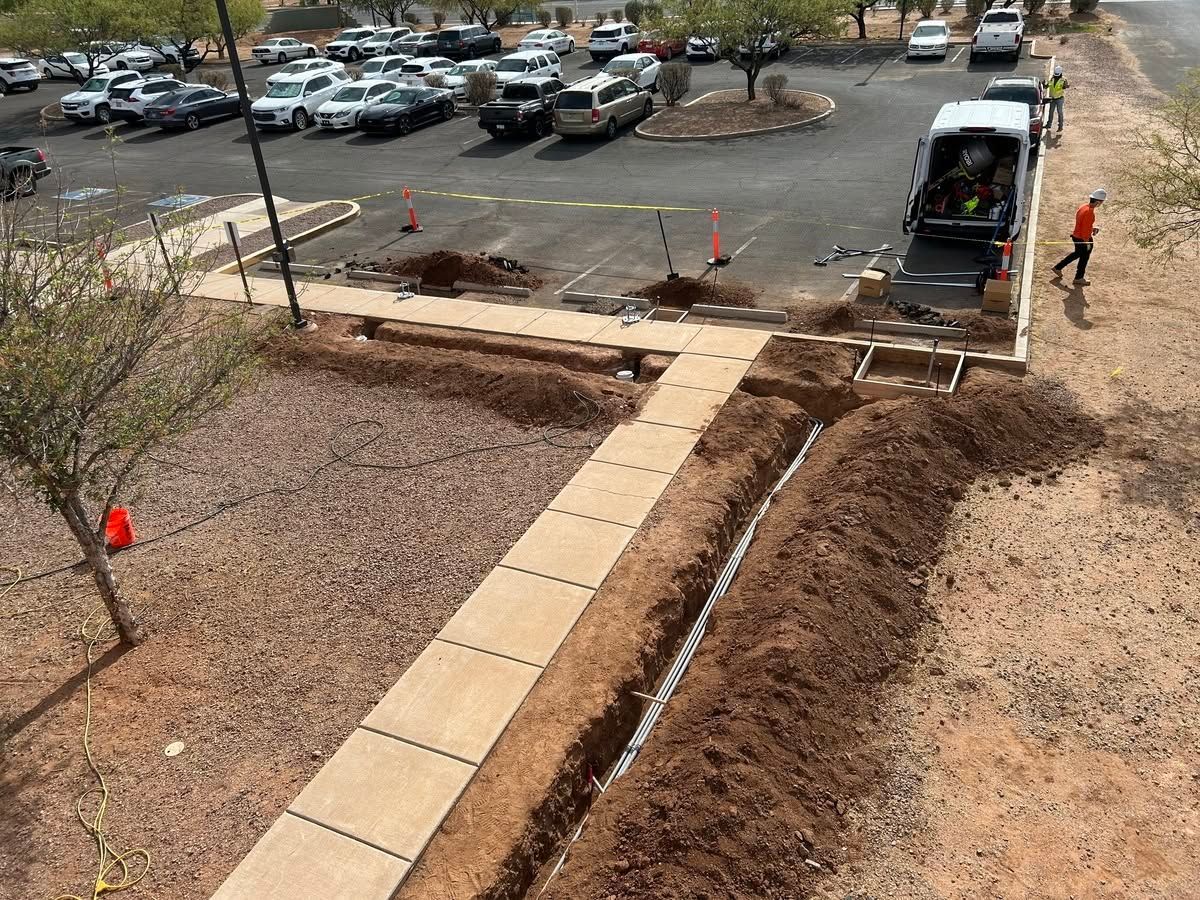
UTILITY
Utility Coordination and Load Management
APS and SRP both want a load letter, a one-line diagram, and time to schedule any transformer or service changes. We prepare the package, track the queue, and add listed load-management equipment so the site stays inside the service you already have.

EXPANSION
Future-Ready Conduit and Panel Space
Spare raceway under the pavement, empty breaker positions, and a panel with headroom turn a 4-port lot into a 12-port lot without a second trench. Planning the expansion path during the first project costs little and saves a great deal of concrete later.
THE WORD ON OUR WORK
WHAT OUR CLIENTS SAY.
Property managers write about the schedule more than the chargers: the trench that closed on Friday and reopened Monday, the inspection that passed on the first visit, the ports that lit up on time. Read what business owners and fleet managers around Arizona said about working with us.
Common questions
FREQUENTLY ASKED QUESTIONS.
Questions we hear from property managers, owners, and fleet operators before a commercial charging project starts, from how many ports a lot needs to what a demand charge does to the monthly bill.
What trips up most commercial EV charging projects before they even break ground?
Underestimating the electrical load. MaxCharged starts with a load calculation, then layout, expected usage, port count, network needs, ADA-compliant stalls, and utility coordination with APS or SRP. Planning for expansion now avoids a second trench later.
How many chargers does a parking lot need per space?
About one charger per 10 parking spaces is the common workplace rule of thumb, since cars there sit for a full shift. Retail and multifamily lots vary with dwell time, so we start from expected usage and leave conduit for more ports.
Should my business install Level 2 or DC fast chargers?
Level 2 fits sites where drivers stay for hours, such as offices, apartments, and hotels, and needs less service to feed. DC fast chargers make sense where a driver wants a quick stop, but the equipment needs heavy service and carries demand charges.
How much power does a commercial Level 2 charger need?
Between 40 and 80 amps per unit on a 208- or 240-volt circuit, typically, with the breaker sized at 125% of the charger's continuous draw. MaxCharged runs a load calculation on each Arizona commercial site to confirm how many units fit.
What are demand charges and how do they affect EV charging?
Demand charges bill the highest kilowatt peak your meter hits in a billing period, not just the energy used. On a 50 kW fast charger that peak can be 24 to 39% of operating cost, so load management and rate-plan choice matter.
Do commercial EV charging spaces have to be accessible?
U.S. Access Board guidance calls for an accessible charging space at least 11 by 20 feet with a 5-foot access aisle and operable controls 15 to 48 inches off the ground. Those are recommendations, and inspectors and tenants increasingly expect the layout anyway.
Are there rebates for business EV chargers in Arizona?
SRP pays $2,500 per networked Level 2 port, $3,500 for multifamily, nonprofit, school, and government sites, and $20,000 to $25,000 per DC fast-charge site for installs completed May 1, 2026 to April 30, 2027. MaxCharged documents Arizona projects to the program's requirements.
What does networked charging let a property owner do?
Networked stations let you set the price drivers pay, limit access to tenants or employees, watch usage in real time, and pull reports on energy and revenue. The network provider adds its own service fees, so the rate schedule should account for that.
HOW WE WORK
FROM SITE SURVEY TO FIRST CHARGE, HERE IS HOW.
STEP 01
Survey The Lot And The Service
We walk the parking layout, open the main switchgear, and record the service size, load, and panel space. You get an estimate as part of that visit, with the port count the property supports today and what an upgrade would add.
STEP 02
Design The Layout And Load Plan
Stall positions, accessible spaces, trench routes, and the one-line diagram come together in a drawing set built for the Minor Site Plan review. Load management and future conduit get drawn in now, when adding a line costs nothing.
STEP 03
File Permits And Utility Paperwork
The site plan goes to the city and the load letter goes to APS or SRP within a day of your approval. We track both queues, answer reviewer comments the same week, and keep you posted on the dates.
STEP 04
Trench, Wire, And Set The Pedestals
Installation starts within 2 days of an approved permit. Conduit goes in the ground, feeders get pulled, and pedestals get set on footings in phases so drive lanes and entrances stay open through the workday.
STEP 05
Commission And Network Each Port
Every charger gets tested under full load, tied to its network account, and set up with your access rules and rate schedule. Signage, stall striping, and lighting get checked against the approved drawings before we call for inspection.
STEP 06
Owner Walkthrough And Inspection Sign-Off
The owner walks the site with you before our trucks leave, reviewing every port, cabinet, and trench patch. Then we meet the inspector, close the permit, and hand over the certificate of completion and the documentation your rebate application needs.
Get Your Free Estimate
FIND OUT WHAT YOUR LOT CAN CARRY, FREE.
Send MaxCharged the address, a rough port count, and a photo of the electrical room, and we will schedule a site survey anywhere in Arizona. No cost, no pressure. Start with the contact form on this site.
WHAT YOUR SITE SURVEY COVERS
✓ Service size and existing load
✓ Port count the property supports today
✓ Stall layout and accessible spaces
✓ Permit and utility timeline
✓ Rebate eligibility by utility
✓ Expansion path for future ports