
Solar-Powered Mini-Splits
SOLAR-POWERED MINI-SPLITS IN Phoenix, AZ
A 12,000 BTU hybrid solar mini-split runs on about 3 to 6 rooftop panels, roughly 870 to 1,500 watts of PV feeding a DC compressor directly, with no batteries in the system. MaxCharged installs solar-powered mini-split systems in Phoenix, AZ for garages, casitas, workshops, additions, and rooms the central air never reached: the wall unit, the panel array, its wiring, the dedicated circuit, and the grid-backup connection for the night. Licensed and insured, Tesla-certified, and permitted on every job.
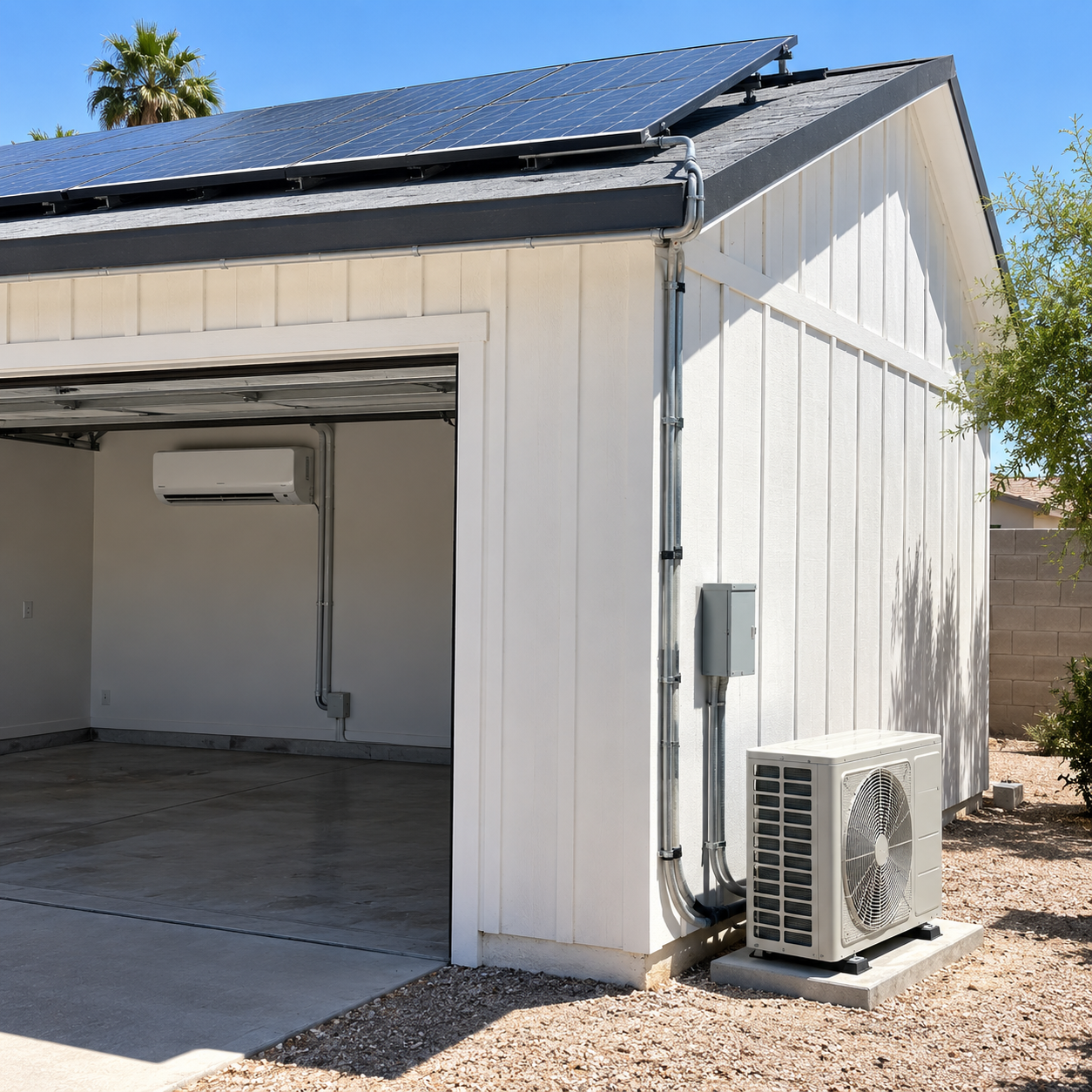
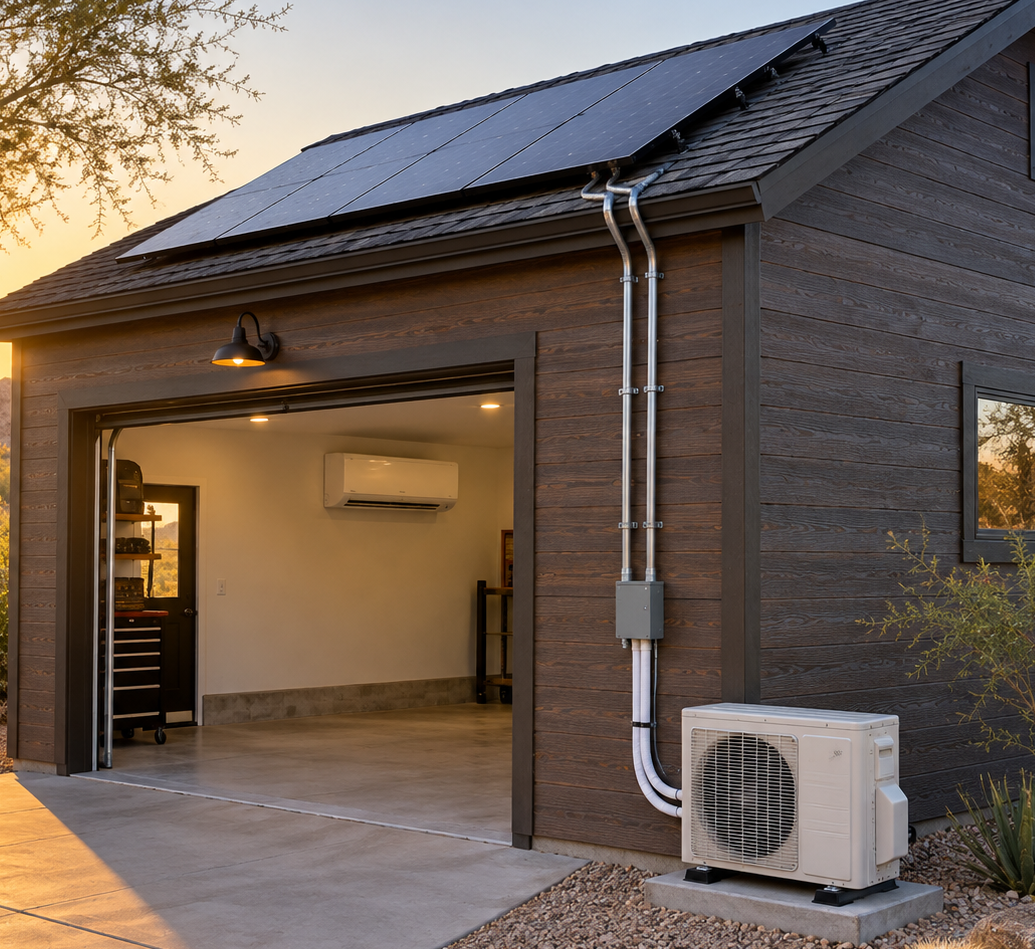
COOL THE GARAGE WITHOUT FEEDING THE METER ALL DAY.
The hottest hours of the day are the hours the panels produce the most, which is the whole logic of a hybrid mini-split. The compressor and fans run on DC straight from the array while the sun is up, so the afternoon cooling load costs the meter nothing. When the sun drops, the unit switches to grid power and keeps running.
No battery bank, no inverter, no separate solar installer to coordinate with. One wall unit, a few panels, a dedicated circuit, and the wiring that ties the three together, done by the electrician who pulled the permit.
✓ Hybrid AC/DC mini-splits
✓ 3 to 6 panel arrays
✓ Grid backup wired in
✓ Heat-pump mode for winter
SOLAR-POWERED MINI-SPLITS
THE ROOM YOUR CENTRAL AIR FORGOT CAN BE 75°F.
Detached garages, casitas, converted patios, and workshop additions across Phoenix, AZ share a problem: the house's ductwork never reached those spaces, and extending it means a bigger air handler and a contractor in the attic. A mini-split needs a 3-inch hole through the wall and a dedicated circuit. Feed it from a handful of panels and the space that used to be unusable from May to October becomes the coolest room on the property.
PHOENIX GARAGES HIT 130°F. WE SIZE FOR THAT.
A closed Phoenix garage sits at 110 to 130°F on a summer afternoon. The sizing rule starts at about 20 BTU per square foot, then adds 30 to 40% for no insulation and 15 to 20% for an uninsulated door, so a 400 square foot uninsulated garage lands near 11,600 BTU. One hybrid model is rated to keep operating at 136°F outdoors, which is the margin this city calls for.
THE SUN DOES THE COOLING. WE DO THE WIRING.
A hybrid mini-split is a cooling appliance with a solar array on one side and a grid circuit on the other, and both sides are electrical work. Our 10 years of EV charger work were spent sizing dedicated circuits and passing inspections on the first visit. The array wiring, the DC input, the backup circuit, and the permit all sit inside that skill set. What room have you given up on?
WHY CHOOSE US FOR SOLAR-POWERED MINI-SPLITS.
Sized For The Room, Not The Brochure
Square footage is the starting point, not the answer. Insulation, door type, sun-facing walls, and what the space is used for all move the BTU number, and we walk the room and measure before recommending a unit or a panel count.
Panels Matched To The Compressor
Too few panels and the unit leans on the grid all afternoon; too many and you paid for watts the compressor cannot use. We size the array to the unit's DC input window and to the roof section that gets the longest sun.
Grid Backup Done To Code
Night operation depends on the backup circuit, and it is a permitted, dedicated line like any other. We size the breaker, run the conduit, and land the connection so night operation is automatic and inspection-ready from day one.
Roof Work Built For The Heat
Rooftop conduit bakes, and wiring run flat against shingles or tile gets hotter still. We keep raceways off the roof surface, use fittings rated for sun and monsoon rain, and seal every penetration so the array stays dry and the attic does too.
Heating Included At No Extra Wiring
Come January, the same unit runs in reverse, moving heat into the room instead of out of it. We commission heat-pump mode at handover, so a workshop or casita stays usable through the cold snaps without a space heater.
One Contractor, One Schedule
Solar, cooling, and electrical usually mean three trades and three calendars. Here the array wiring, the dedicated circuit, and the backup connection are planned, permitted, and finished by one contractor, so nobody waits on a subcontractor who has not shown up yet.
WHAT WE INSTALL
OUR SOLAR-POWERED MINI-SPLITS WORK
Every job here is built from the same parts, arranged for a different room. These are the pieces we handle, from the panel array on the roof to the heat-pump setting on the remote, all on one schedule.

HYBRID
Hybrid Solar Mini-Split Installation
Mounting the wall cassette, setting the outdoor DC compressor unit, running the line set through a 3-inch penetration, and connecting both the solar input and the grid feed. The unit is commissioned under sun and again under grid power before handover.

ARRAY
Solar Panel Array Sizing
3 to 6 panels, roughly 870 to 1,500 watts, is the working range for a 12,000 BTU unit. We check the roof orientation, shading through the afternoon, and the unit's voltage window, then pick a count that carries the compressor through peak heat.

GARAGES
Garage and Workshop Cooling
Uninsulated walls, a metal door facing west, and a car radiating heat all inflate the load. Garage installs get sized with those adders in, placed away from the door track, and wired on a circuit that does not share with the charger.

CASITAS
Casita and Addition Cooling
Guest houses and additions usually sit at the end of the ductwork or beyond it entirely. A hybrid unit gives the space its own thermostat, its own array, and a grid line sized for overnight guests, without touching the main house's air handler.

BACKUP
Grid Backup Wiring
When the sun sets or a monsoon cloud parks overhead, the unit draws AC from a dedicated circuit we run from the panel or a subpanel. Breaker sizing, conduit, and the disconnect are permitted and inspected like any other branch circuit.
HEAT MODE
Heat-Pump Mode Setup
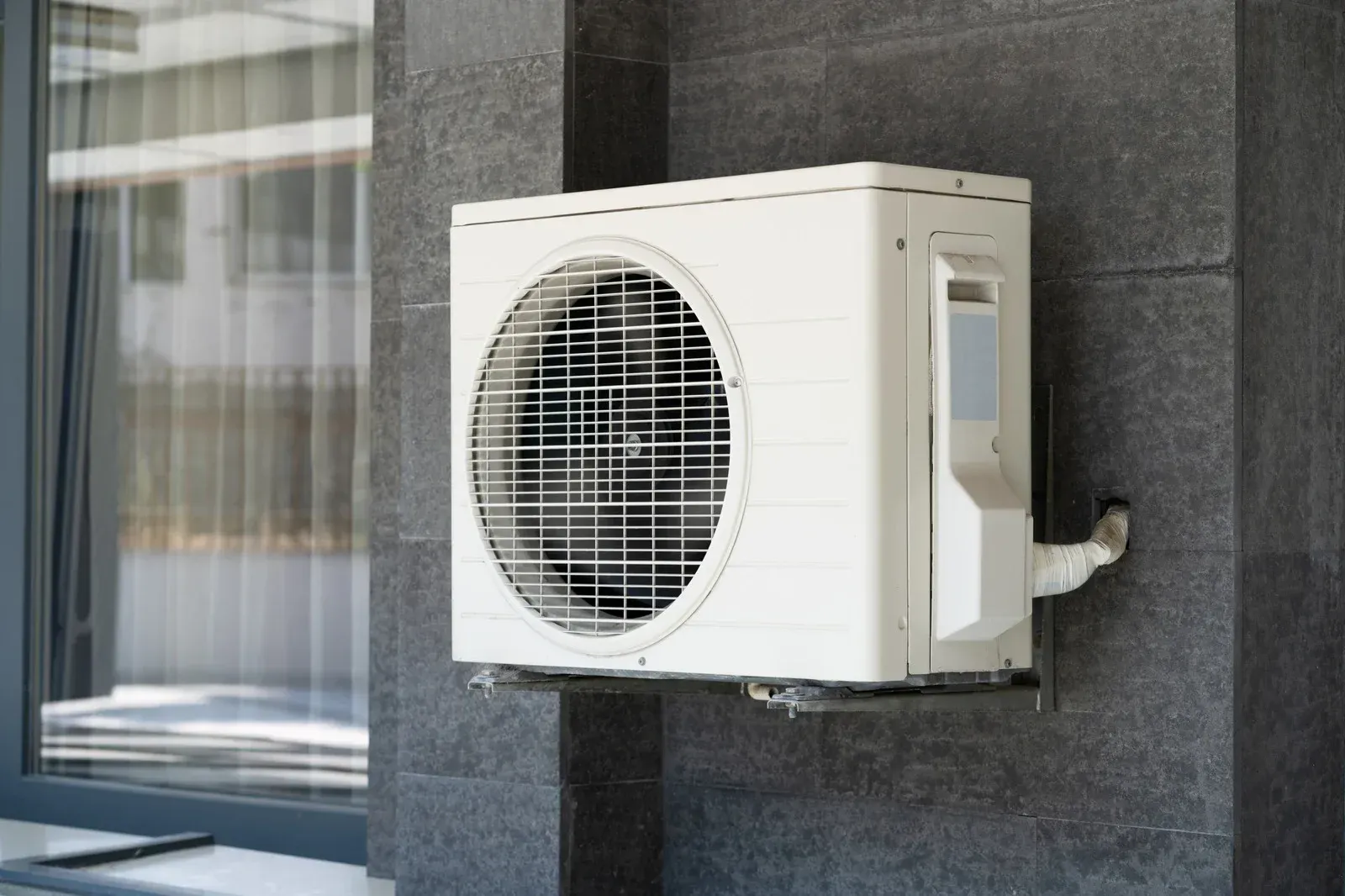
Hybrid units are heat pumps, so winter heating comes from the same compressor. We set up the mode, verify heating output under grid power, and show you the controls, so the room stays usable when desert nights drop near freezing.
THE WORD ON OUR WORK
WHAT OUR CLIENTS SAY.
Reviews for this work read like relief. A woodshop that finally opened in August, a casita a mother-in-law could sleep in, a garage gym that stopped being a sauna. Read what property owners said about the room that came back, told the way it happened.
Common questions
FREQUENTLY ASKED QUESTIONS.
Hybrid solar cooling is new to most people, so the questions run from batteries to panel counts to whether the unit can take a 115°F afternoon. Here are the ones we hear first.
Does the mini-split stop cooling once the sun goes down?
No, it switches over automatically. Daylight hours run the compressor on DC power straight from the array, then the unit pulls from the grid once production drops, whether that's sunset or passing monsoon clouds.
Does a solar mini-split need batteries?
No. A hybrid unit runs on the panels while the sun is up and draws from the grid at night, so the grid is the battery. Adding storage is possible but adds cost and equipment most garages and casitas do not need.
How many solar panels does it take to run a mini-split?
About 3 to 6 panels, or roughly 870 to 1,500 watts, carries a 12,000 BTU hybrid unit through the day. MaxCharged sizes the array in Phoenix, AZ to the unit's DC input window and to the roof face with the longest sun.
What efficiency rating do solar mini-splits have?
Most hybrid solar mini-splits run above 20 SEER2, and one common unit is rated over 22 SEER. The number understates the real effect, because the daytime hours when the compressor works hardest are also the hours the panels are covering the load.
Is a mini-split the best way to cool a garage in Arizona?
For most garages, yes. A ductless unit needs only a 3-inch wall penetration, runs at outdoor temperatures well past 115°F, and gives the space its own thermostat without loading the house's air handler. Feeding it from panels removes the operating cost objection.
What size mini-split does an Arizona garage need?
Start at about 20 BTU per square foot, then add 30 to 40% for no insulation and 15 to 20% for an uninsulated door. A 400 square foot uninsulated garage lands near 11,600 BTU, and MaxCharged confirms the figure in Phoenix, AZ.
Does a solar mini-split heat as well as cool?
Yes. Hybrid units are heat pumps, and one common model is rated for 12,000 BTU of heating with an HSPF of 11. In winter the compressor runs in reverse and pulls heat into the room, on solar or grid power.
Can a solar mini-split keep up in extreme heat?
One hybrid model is rated to operate up to 136°F outdoors and to cover up to 650 square feet, which clears a 130°F garage. Correct sizing matters more than the rating, because an undersized unit runs nonstop and never catches up.
HOW WE WORK
FROM HOT ROOM TO COLD AIR, HERE IS HOW.
STEP 01
Walk The Space And The Roof
We measure the room, note insulation, door type, and sun exposure, then look at the roof face and the panel for capacity and breaker space. The estimate comes out of this visit, in writing, with a BTU figure and a panel count.
STEP 02
Size The Unit And The Array
The load calculation sets the BTU rating, and the unit's DC input window sets the panel count. You see both numbers and the reasoning before anything is ordered, and you can choose a slightly larger unit if the room may grow.
STEP 03
Permit The Circuit And The Array
Permitting starts within a day of your approval, and installation begins within 2 days of the approved permit. The dedicated backup circuit, the array wiring, and the equipment mounting are all permitted together, so you deal with one inspection date.
STEP 04
Mount, Wire, And Seal
Panels go up with raceways kept off the roof surface, the outdoor unit is set on a pad or bracket, the line set passes through a 3-inch penetration, and every roof and wall opening is sealed against monsoon rain.
STEP 05
Commission On Sun And On Grid
We run the unit on solar alone under full sun, then cover the array feed to confirm the grid takes over on its own, then switch to heat-pump mode. Each transition gets logged before you sign anything.
STEP 06
Owner Sign-Off And Walkthrough
The owner inspects the finished job before we leave: panel mounting, conduit, breaker labels, sealing, and the unit running in both modes. Then we walk you through the remote, schedule the inspection, and hand over the certificate of completion.
Get Your Free Estimate
GET A QUOTE ON COOLING THAT ROOM, FREE.
Tell MaxCharged which room in Phoenix, AZ is too hot to use and we will come out, size the unit, and put a number on it. The visit costs nothing and nobody pushes afterward. Use the estimate form on this site.
WHAT YOUR ESTIMATE COVERS
✓ A BTU figure for the room
✓ Panel count and roof placement
✓ Backup circuit and breaker sizing
✓ Permit and inspection plan
✓ Heat-pump mode included
✓ A written estimate, no pressure