
Solar Panel Service & Repair
SOLAR PANEL SERVICE & REPAIR IN Phoenix, AZ
Solar panel surfaces can reach 149°F, and a module loses 0.24 to 0.30% of its output for every °C above its 77°F rating, yet the city banks 3,872 hours of sunshine a year. MaxCharged provides solar panel repair in Phoenix, AZ on the electrical side of existing systems: wiring, breakers, disconnects, terminals, subpanel and main panel upgrades, battery storage integration, and load coordination with EV chargers. Licensed and insured under Arizona ROC #CR11-346079, we service arrays we did not install.
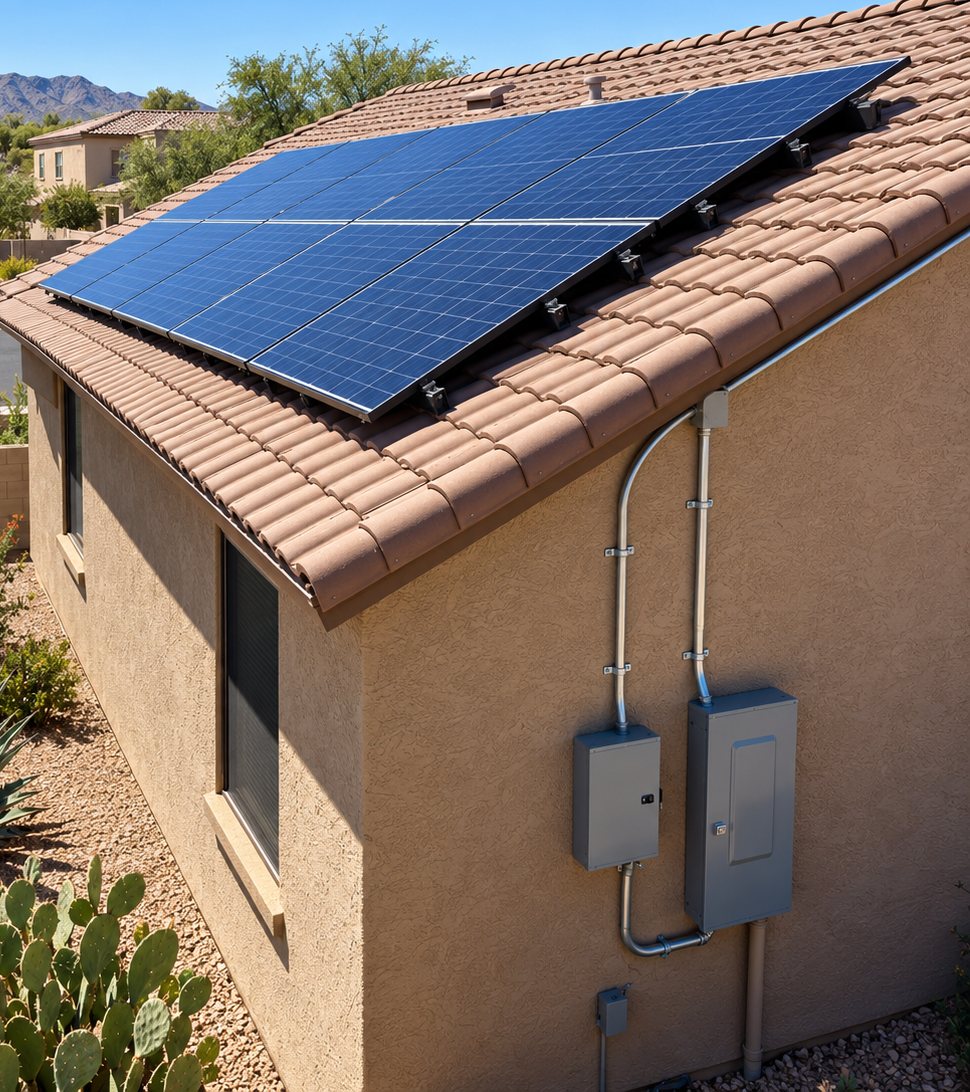
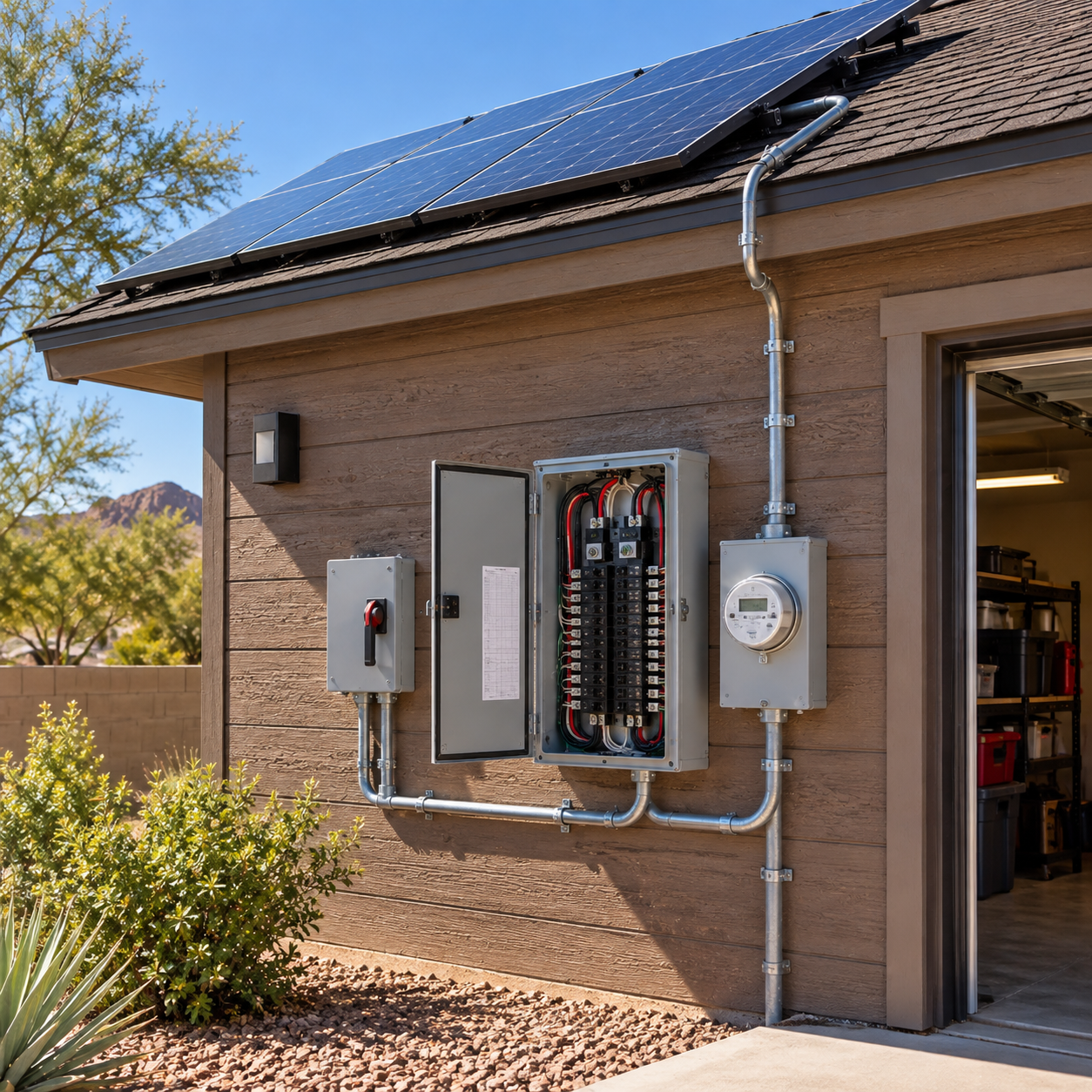
YOUR ARRAY IS ONLY AS GOOD AS THE COPPER BEHIND IT.
A solar system looks like glass on a roof, but most of what fails is out of sight: a lug loosened by a thousand heat cycles, a DC connector that let monsoon moisture in, a breaker browned at the terminal. The app just reports less than it should. We trace the path from roof to meter and put it right.
Cleaning glass and swapping inverters are not our trade, and we say so up front. Everything between the modules and your main panel is, and that is where most of the trouble lives.
✓ Existing systems, any installer
✓ Wiring, breakers, and disconnects
✓ Load checks for EV chargers
✓ Battery storage tied in right
SOLAR PANEL SERVICE & REPAIR
THE ROOF IS FINE. THE CONNECTION UNDER IT IS NOT.
Most production complaints we get in Phoenix, AZ start the same way: the panels look untouched, the inverter shows a fault code nobody can decode, and the installer stopped answering the phone. Rapid-shutdown devices fail and take a string to zero. Terminals expand and contract until the torque is gone. Each of those is an electrical diagnosis, and each is a repair we can make without touching the glass.
IN MARICOPA COUNTY, LOST PRODUCTION IS LOST MONEY.
APS credits exported solar at 5.554 cents per kWh for systems interconnected from September 2026 through August 2027, locked for 10 years; SRP credits 3.45 cents. Every kilowatt-hour a dead string fails to produce is one you buy back at retail. The inverter is the component most likely to quit, but a tripped breaker or a cooked terminal drops output just as fast and costs far less to correct.
SOMEBODY ELSE INSTALLED IT. WE WILL STILL STAND BEHIND THE FIX.
Orphaned systems are common here. The company that sold the array folded, merged, or moved on, and the homeowner is left holding a monitoring login and a fault code. Our 10 years of EV charger work were spent inside the same panels those arrays feed, so the backfeed breakers, lugs, and disconnects are familiar ground. We service homes across Maricopa County and commercial arrays statewide across Arizona. Is your installer still picking up the phone?
WHY CHOOSE US FOR SOLAR PANEL SERVICE & REPAIR.
Diagnosis Before Any Part Is Ordered
A zeroed string can be a rapid-shutdown device, a breaker, a connector full of moisture, or an inverter that simply needs a restart. We meter the DC and AC sides before recommending anything, so the fix matches the fault instead of the guess.
Honest Limits, Stated Up Front
Glass cleaning and inverter swaps go to the people who do those for a living, and we tell you that on the first call. What we take on is the wiring, protection, and panel work, and we take it on completely.
Heat-Rated Repairs That Hold
Terminals that were torqued at 70°F loosen after summers at 120°F in an attic or on a roof. Every connection we remake gets torqued to the manufacturer's spec, checked again under load, and documented, so the repair outlasts the season that caused it.
One Panel For Solar, Charger, And Storage
Solar backfeed, an EV charger, and a battery all compete for space and capacity in the same main panel. We run the load calculation, size the breakers, and lay out the bus so the three coexist without nuisance trips or a code violation.
Permits And Inspections Handled
Panel upgrades, subpanels, and new disconnects for an existing array still need a permit and a passed inspection. We file it, schedule the inspector, and hand you the paperwork, so the system stays insurable and the utility interconnection stays in good standing.
Plain Reporting You Can Act On
You get a written summary of what was tested, what was found, and what was corrected, in language a homeowner can follow. If a fault belongs to the module or inverter manufacturer, the report gives you what the warranty claim needs.
WHAT WE SERVICE
OUR SOLAR PANEL SERVICE & REPAIR WORK
The electrical half of a solar system is our half. These 6 services run from the roof junction box down to the meter, and each one starts with measurement rather than a parts list.

WIRING
Solar Wiring Inspection
Conduit on a roof cooks its contents, and the insulation inside cracks before anyone notices. We inspect the DC home runs, the AC output wiring, the junction boxes, and the grounding, looking for chafe, moisture, rodent damage, and connectors that no longer seal.

BREAKERS
Breaker and Disconnect Repair
Backfeed breakers that trip on sunny afternoons are telling you the bus or the breaker itself is running hot. We test that breaker, the AC and DC disconnects, and the rapid-shutdown initiator, then replace whatever is worn, undersized, or discolored.
TERMINALS
Connection and Terminal Repair
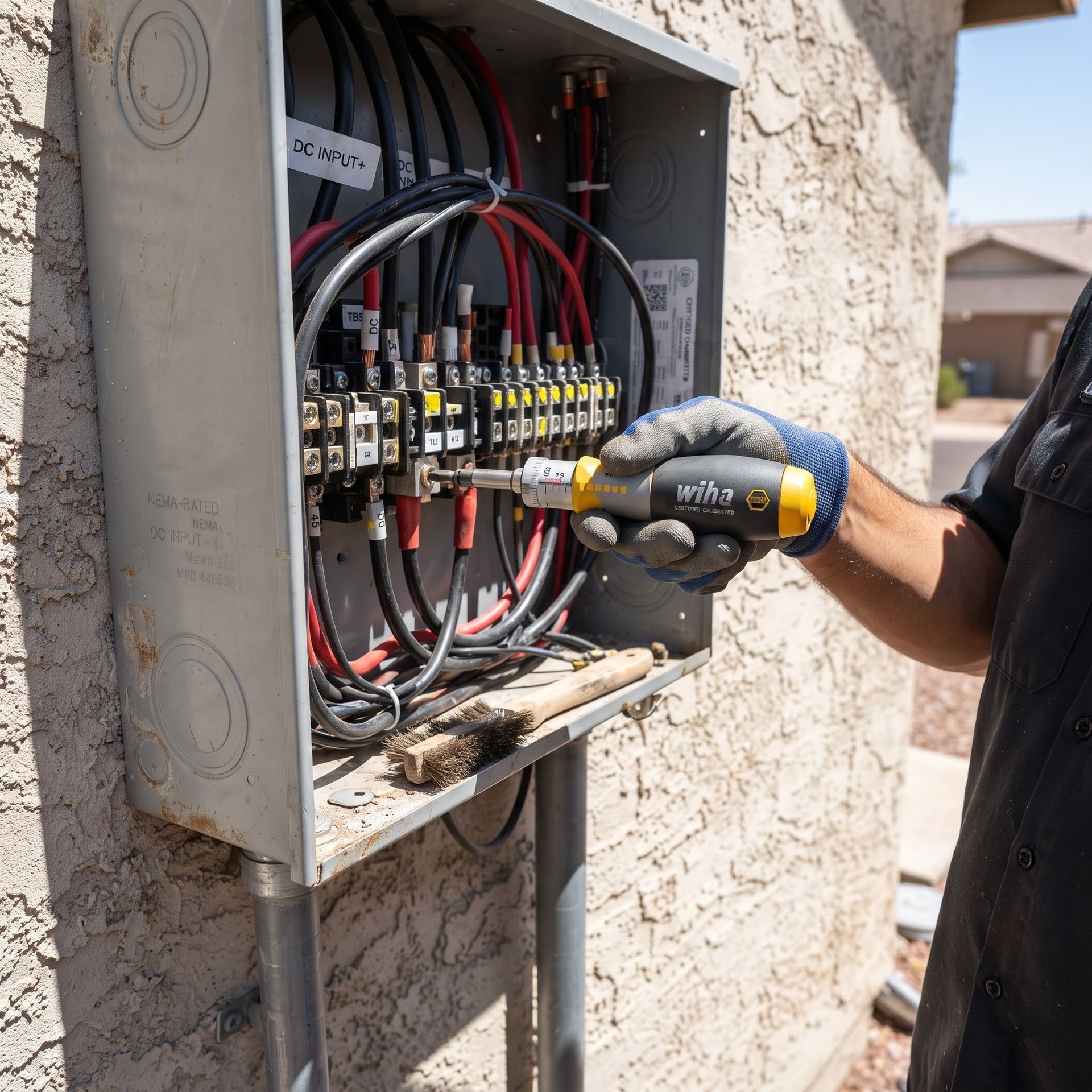
Loose lugs are the quiet killer of solar output. Thermal cycling backs each one off a fraction at a time until resistance builds heat and heat builds failure. Every terminal from the combiner to the panel gets checked, cleaned, retorqued, and marked.

CAPACITY
Subpanel and Main Panel Upgrades for Solar
Older panels run out of bus capacity for solar backfeed, especially once an EV charger arrives. When the numbers say the panel is full, we upgrade the main panel or add a subpanel and reland the solar on a properly rated breaker.
EV PAIRING
Solar and EV Charger Load Coordination
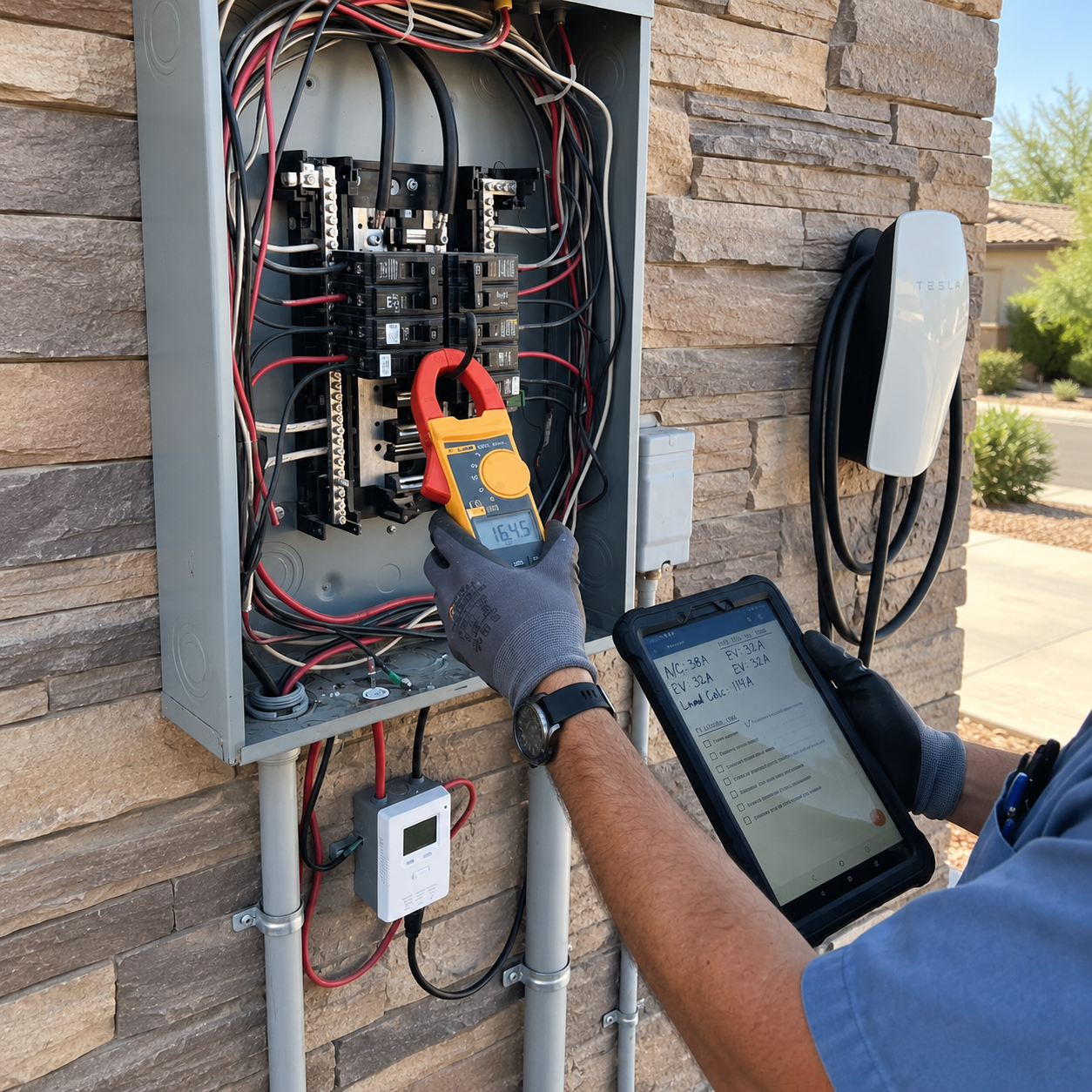
An EV uses 3,000 to 5,000 kWh a year, about what 5 to 10 panels produce. We calculate whether the array, the panel, and the charger circuit can share the service, and add a load-management device or capacity when the math says no.
STORAGE
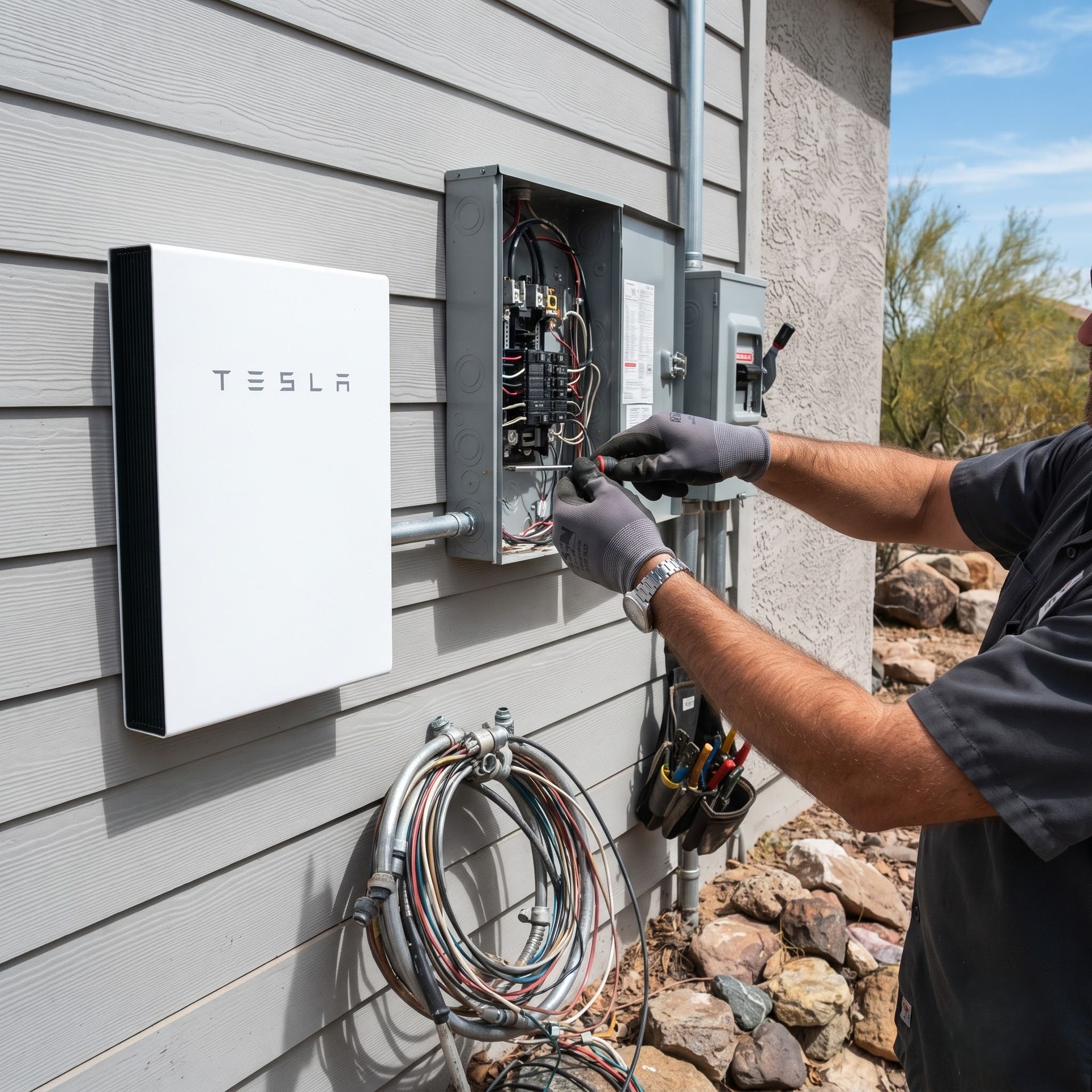
Battery Storage Electrical Integration
Adding a battery to an existing array means new disconnects, a backed-up loads panel, and utility interconnection paperwork. We handle the panel side of that tie-in and coordinate with the battery installer so storage, solar, and house switch over as designed.
THE WORD ON OUR WORK
WHAT OUR CLIENTS SAY.
Customers here write about the parts nobody else would touch: the array a defunct installer left dark, the breaker that tripped every afternoon in July, the report that finally explained the fault code. Read what homeowners and property managers said about getting production back.
Common questions
FREQUENTLY ASKED QUESTIONS.
The questions below come from solar owners staring at a monitoring app that reads zero, an inverter light that turned red, or a bill that went up after solar. Ask yours at the visit.
If my solar panels stop producing, is that something MaxCharged handles?
The electrical side, yes. We don't clean panels, but wiring, breakers, disconnects, and terminal faults between the roof and the meter, the usual causes of lost production, fall squarely within what we diagnose and repair.
Why is my solar system not producing any energy?
Usually a tripped AC breaker or a grid outage stops the system, and an inverter fault that a power cycle clears comes next. If the breaker holds and a restart does not help, look upstream at the DC wiring or a rapid-shutdown device.
Why is my solar inverter showing a red light?
A red light usually means a fault or a grid-sync error, and during a utility outage it is normal. If a restart does not clear it, MaxCharged in Phoenix, AZ meters the DC input and AC output to find what tripped.
What should I do if my solar panels are not producing enough power?
Rule out shade and dirt first, then compare per-panel output in the monitoring app. One module stuck at zero or a whole string missing points to a failed rapid-shutdown device or a wet DC connector, an electrical fault rather than a panel problem.
Why did my utility bill go up even though I have solar?
Most often the system stopped producing weeks ago after an inverter or breaker fault. APS bills carry a grid access charge and credit exports below retail, so a small production loss shows up fast. MaxCharged in Phoenix, AZ checks the electrical side first.
What should I do if my solar installer went out of business?
Manufacturer warranties on the modules and inverter still apply, and an independent licensed electrician can service the wiring, breakers, and connections on an orphaned system. Gather the original permit, the single-line drawing, and your monitoring login, because those documents shorten the diagnosis considerably.
What is a ground fault or arc fault on a solar system?
A ground fault is current leaking through damaged insulation to a grounded surface; an arc fault is electricity jumping across a loose or corroded connector. Inverters shut down automatically when either is detected and stay off until the wiring is repaired.
Does Arizona heat reduce solar panel output?
Yes. Modules are rated at 77°F and lose 0.24 to 0.30% for each °C above that, and panel surfaces here reach 149°F. Sunshine still wins over the year, but heat also loosens terminals and ages connectors, which is where the real losses begin.
HOW WE WORK
FROM FAULT CODE TO FULL PRODUCTION, HERE IS HOW.
STEP 01
Tell Us What The App Shows
Send the fault message, the inverter light color, and a screenshot of production if you have one. That lets us arrive with the right meters and a working theory instead of starting from a blank page in your driveway.
STEP 02
Meter The Whole Electrical Path
On site we test the backfeed breaker, disconnects, string voltages, and terminal temperatures under load, and we open the panel to check bus capacity. The estimate for any repair comes out of that survey, in writing.
STEP 03
Explain What Failed And Why
You get the finding in plain terms: what tripped, what loosened, what leaked, and whether it belongs to us or to the inverter manufacturer. Nothing gets replaced until you have approved the scope and the price.
STEP 04
Pull The Permit Where Needed
Panel upgrades, subpanels, and new disconnects get permitted within a day of your approval, and work begins within 2 days of the approved permit. Simple terminal and breaker repairs need no permit and start sooner.
STEP 05
Repair, Retorque, And Retest
Worn breakers get replaced with listed matches, terminals get cleaned and torqued to spec, damaged runs get repulled, and the inverter is brought back online. Then we watch production climb before calling the repair done.
STEP 06
Owner Check Before We Leave
The owner signs off on the repair before anyone leaves the property, verifying torque marks, breaker labels, disconnect placement, and live production numbers against the array's rating. Any required inspection is scheduled and the certificate of completion goes to you.
Get Your Free Estimate
GET YOUR ARRAY LOOKED AT, FREE.
If your array is producing less than the sun offers, MaxCharged will come out in Phoenix, AZ, meter the electrical side, and tell you what is wrong and what the fix takes. No pressure. Start with the contact form on this site.
WHAT YOUR DIAGNOSIS COVERS
✓ Breakers and disconnects under load
✓ String and terminal testing
✓ Panel capacity for solar and charger
✓ Fault code interpretation
✓ Permit needs identified
✓ A written scope and estimate