Commercial EV Charging Stations in Phoenix: Site Survey, Permits, and What to Expect
August 24, 2026
Adding EV charging to a Phoenix commercial property is not as simple as installing a heavy-duty outlet. Because Arizona heat accelerates battery degradation and drivers charge more frequently, demand for workplace and public charging is growing faster here than in cooler markets — which means your panel, conduit routes, and utility account all need evaluation before a single charger goes up.
This guide walks through each stage of the process in order: site survey, load calculations, City of Phoenix permits, APS or SRP coordination, dedicated circuits, and final activation. If you manage a parking lot, garage, office complex, or fleet yard, you will know exactly what to expect before you make any decisions.
What Does a Commercial EV Charger Site Survey Involve?
A site survey is a physical assessment of your property that tells the electrician what is possible, where equipment can go, and what upgrades the existing infrastructure will require before installation begins.
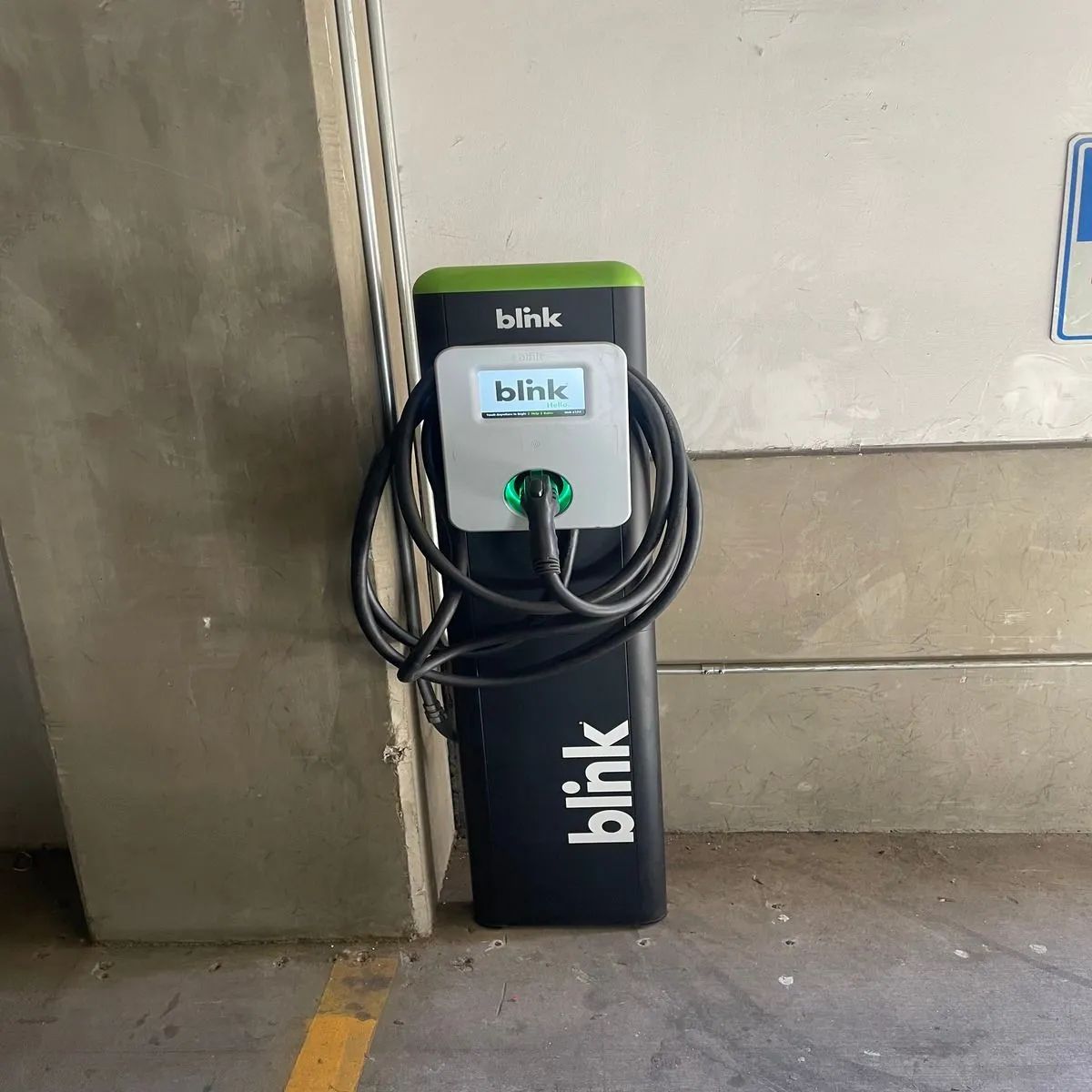
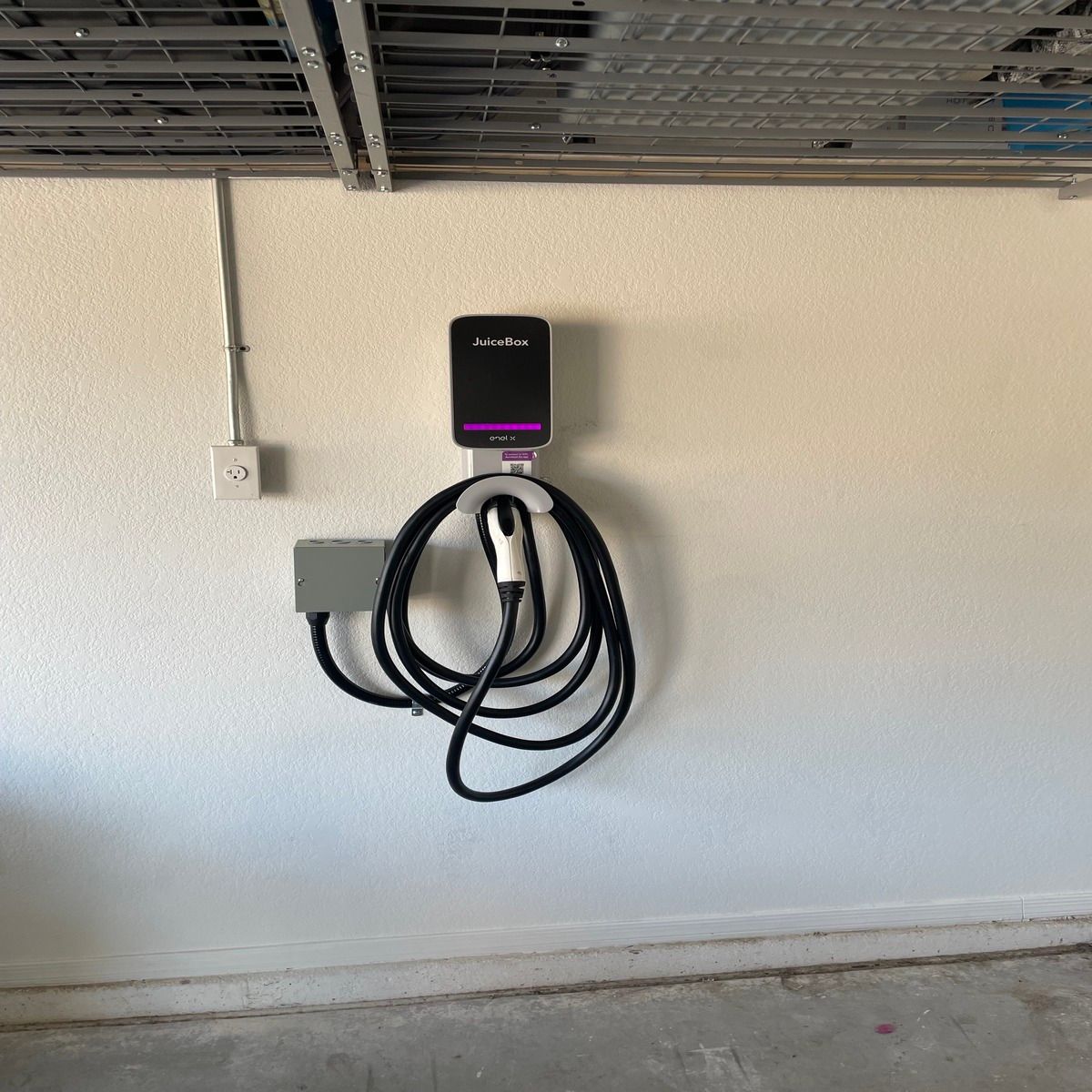
The electrician checks your main service panel location, measures the conduit routing distance from the panel to each proposed charger spot, reviews your existing electrical load, and maps the parking layout for charger placement options. In a surface lot, they are also noting where conduit trenching would run and whether bollard protection is needed. In a garage, they are looking at ceiling routes, structural attachment points, and ventilation clearances.
Skipping this step leads to cost surprises mid-project. A thorough survey produces a load calculation and a realistic scope — which is what your permit application will be based on. You can learn more about the full EV charger installation process on our services page.
Do Commercial Chargers Need Dedicated Circuits in Phoenix?
Yes — each commercial EV charging unit requires its own dedicated circuit, meaning no other devices share that breaker, so the full amperage demand of the charger is always available and protected.
A Level 2 commercial charger (208–240V) typically draws 40–80 amps per unit. A DC Fast Charger draws far more. Running four Level 2 chargers at 80A each adds 320 amps of new load to your system. That is a significant draw, and it is why load calculations happen before anyone picks charger models or counts stalls.
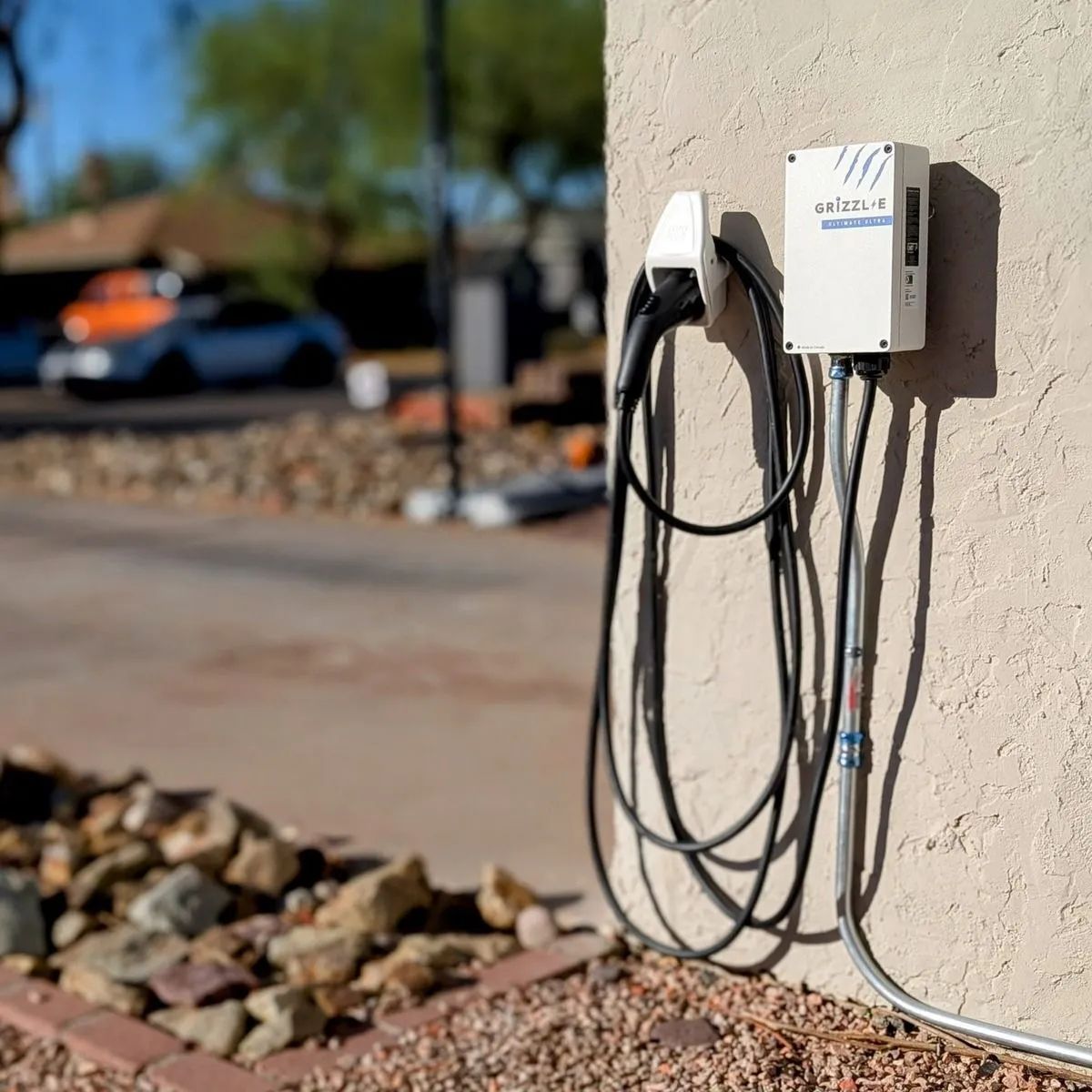
In parking lots, dedicated circuits typically run through underground conduit. In garages, conduit follows ceiling paths to each stall. Fleet yards with overnight charging profiles often move to 480V three-phase service to handle high simultaneous demand without oversizing every individual circuit.
How Many Chargers Can My Panel Support?
The answer depends on your current service amperage and how much of that capacity is already spoken for by your building loads — not on the total rating stamped on your panel.
Most commercial buildings have service ranging from 200A to 800A or more, but available capacity after existing loads is what matters. An electrician performs a load bank analysis to find that number. If the result shows insufficient headroom, a main panel upgrade or service entrance expansion is required before chargers can be added safely.
DC Fast Chargers (50kW–350kW) almost always require a dedicated service upgrade and utility coordination for a new transformer tap. Level 2 chargers on smaller properties sometimes fit within existing capacity — but only a load calculation confirms that, not a visual inspection of the panel.
What Permits Are Required for Commercial EV Charger Installation in Phoenix, AZ?
Commercial EV charger installations in Phoenix require an electrical permit issued through the City of Phoenix Development Services Department. Work must be performed by a contractor holding an Arizona Registrar of Contractors (ROC) license for commercial electrical work.
Your licensed electrician pulls the permit — not the property owner — and the permit covers the new circuits, conduit work, and charger connections. Inspections are required before any new circuits are energized. Phoenix currently enforces NEC standards, which specify grounding, GFCI protection, and circuit sizing requirements for EVSE installations. ADA accessibility rules also apply to EV parking spaces in commercial lots, so stall layout must account for accessible charger placement.
Permit processing at City of Phoenix Development Services typically takes one to three weeks depending on project scope, though larger or more complex installations may take longer. Plan this into your timeline from the start.
APS or SRP? Why Your Utility Provider Matters for a Phoenix Install
Phoenix commercial properties are served by either Arizona Public Service (APS) or Salt River Project (SRP) — your address determines which one, and the two utilities have different rate structures, service upgrade processes, and EV program timelines.
Both utilities offer commercial EV rate structures, but if your project requires a new meter, a service upgrade, or a transformer tap for a high-load fast charger array, you enter that utility's queue — which can add two to eight weeks to your project timeline. Knowing your utility before you begin helps your electrician coordinate the application correctly and avoids delays from submitting to the wrong provider.
This is one practical reason to work with a local electrician who knows how APS and SRP handle commercial service requests, rather than a national installer unfamiliar with Arizona utility processes. Explore commercial EV charging services designed specifically for Phoenix-area properties.
How Long Does a Commercial EV Charging Installation Take in Phoenix?
A mid-size commercial project in Phoenix realistically takes four to twelve weeks from site survey to the chargers going live — and utility coordination is usually the longest single variable.
Here is a realistic phase breakdown: the site survey and load calculation take one to three days; permit application at City of Phoenix Development Services takes one to three weeks; utility coordination for a service upgrade (if needed) can take two to eight weeks through APS or SRP; physical installation of conduit, wiring, and mounting takes one to five days depending on scope; and final inspection and activation take one to five business days after the inspection request is submitted. Projects that do not require a utility service upgrade move faster — sometimes completing in under four weeks total.
Protecting Your Commercial Charging Array From Surge Damage
Arizona monsoon season brings transient voltage surges that can damage or destroy commercial EV charging hardware — and a multi-unit charger array represents a significant equipment investment that surge protection directly defends.
Whole-panel surge protection devices (SPDs) installed at the main service entrance catch transient spikes before they reach charger electronics. Individual charger-level protection adds a second layer for high-value units. Grid switching events throughout the year create additional surge risk beyond monsoon season, making SPDs a practical addition rather than an optional upgrade on any multi-unit commercial install.
Questions to Ask Before You Commit to an Installation
Before signing any agreement, confirm these points with the electrician or contractor you are evaluating:
- Is your license an Arizona ROC commercial electrical license?
- Do you know whether my address is in APS or SRP territory?
- Will you pull the City of Phoenix permit, and is that included in the quote?
- What does the load calculation show — do I need a panel upgrade first?
- Can the project be phased to spread upfront costs?
- What charging management system do you recommend for my specific use case?
- What warranty and post-installation support do you provide?
A contractor who can answer all seven questions clearly — before you sign — is one who has done this specific type of work in Phoenix before.
Getting commercial EV charging right the first time means fewer surprises, faster permitting, and a system that handles Arizona demand without being undersized or overloaded from day one.
Schedule your site survey with MaxCharged to get a load calculation, permit plan, and honest scope for your Phoenix property.
More EV Charging Articles