Level 1 vs Level 2 vs DC Fast Charging: What's the Difference
October 8, 2026
QUICK ANSWER: Level 1 charging plugs into a standard 120 volt outlet and adds roughly 2 to 4 miles of range per hour. Level 2 runs on a 240 volt dedicated circuit and adds roughly 12 to 32 miles of range per hour, which makes it the practical choice for charging at home. DC fast charging feeds direct current straight to the battery at 50 kilowatts or more and can add 100 to 250 miles in 30 to 45 minutes, but it needs heavy duty utility service and is built for public stations, fleets, and commercial sites. Most drivers rely on Level 2 at home and use DC fast charging only on road trips.
Every EV owner eventually runs into the same confusing set of terms. The car came with a cord that plugs into the wall, a neighbor swears by a wall mounted unit in the garage, and the app on your phone keeps pointing you toward a fast charger across town. They all fill the same battery, so why are there three different levels, and which one belongs in your life?
We answer this question for homeowners and property managers across the Phoenix Valley every week, from Scottsdale and Tempe to Peoria, Goodyear, and Buckeye. The short version is that the three levels differ in voltage, in amperage, and in where the power gets converted. Those differences decide how fast a car charges and also what your electrical panel, wiring, and utility service have to deliver. This guide walks through each level so you can match the equipment to the way you actually drive.
What the Three Charging Levels Actually Mean
The levels come from the automotive engineering organization SAE International, which describes Level 1, Level 2, and Level 3 charging. Level 3 is the category most people call DC fast charging, and you will see both names used for the same thing.
The Core Idea
Your car’s battery stores direct current, while home power uses alternating current. Level 1 and Level 2 chargers convert it inside the vehicle. DC fast chargers convert power externally, sending direct current straight into the battery.
Why The Numbers Differ
Power equals voltage multiplied by current. A 120-volt outlet at 12 amps provides about 1.4 kilowatts, while 240 volts at 40 amps provides 9.6 kilowatts. Faster charging requires greater electrical capacity and infrastructure.
Level 1 Charging: The Cord That Comes With the Car
Many automakers include a Level 1 charging cord with a new vehicle. It plugs into an ordinary household outlet, the same kind that runs a lamp or a vacuum, so nothing has to be installed.
Speed
Expect roughly 2 to 4 miles of range added per hour, depending on how efficient the vehicle is. An overnight session of ten hours might put back 20 to 40 miles. For a driver with a short commute, that can be enough. A person who drives 20 to 30 miles a day and parks at home every night may never need anything faster.
Limits
The same slow rate becomes a problem the moment your driving grows. A truck or large SUV, a longer commute, or a household with two EVs will outrun a standard outlet quickly. Level 1 also sits on a shared circuit in many homes, which means the garage outlet may also feed other outlets and lights. A continuous load on a circuit that was never meant to carry one is where trouble starts.
WARNING: Do not run a Level 1 charging cord through an extension cord or a power strip. The extra length adds resistance, and a charger pulls current for hours at a stretch, so the cord can overheat. Plug directly into a wall outlet that is in good condition, and have an electrician look at any outlet that feels warm or shows discoloration.
Level 2 Charging: The Home Standard
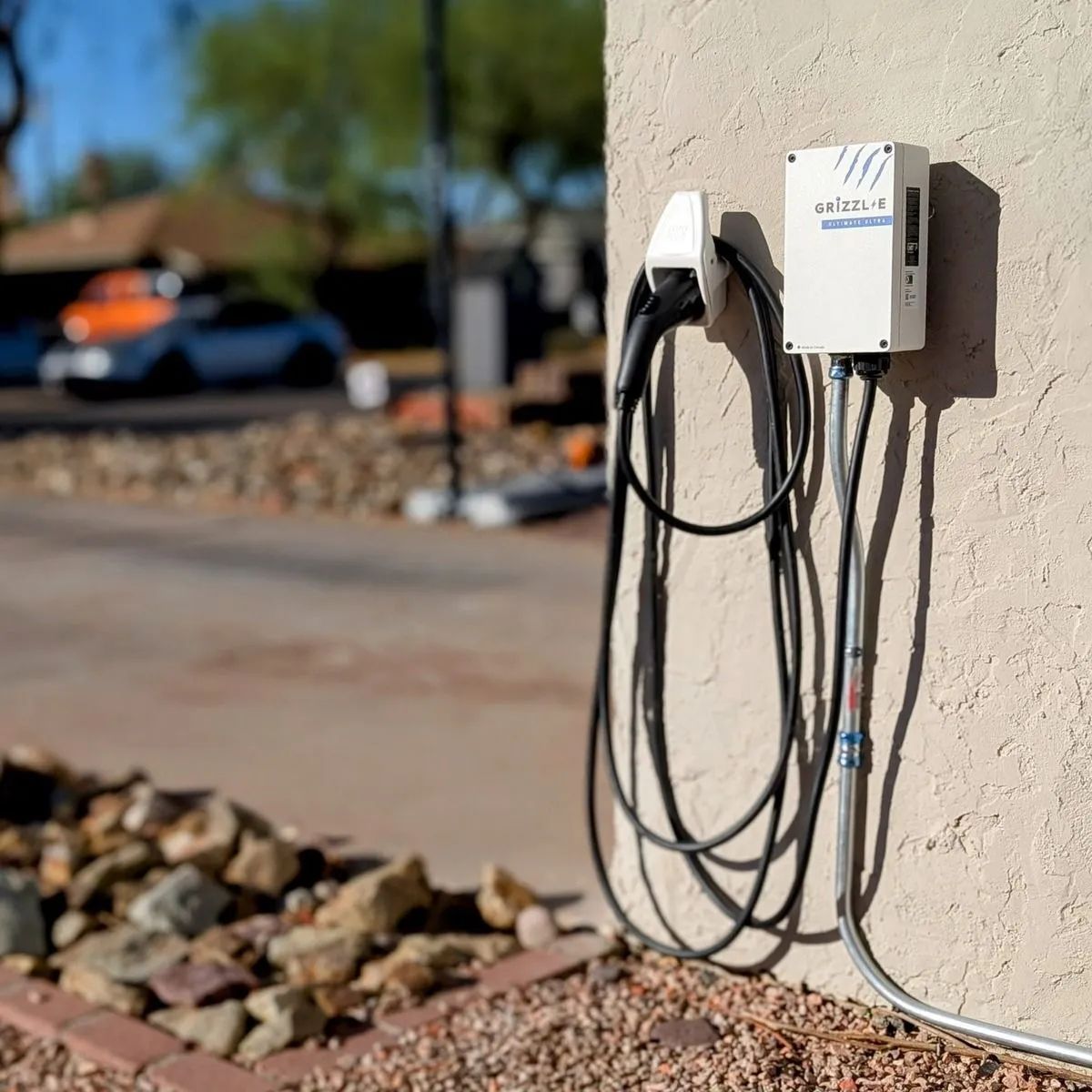
Level 2 charging runs on 240 volts, the same type of supply your electric dryer or oven uses. It moves three to four times the current of a Level 1 setup, which works out to about six to eight times the charging speed.
Speed
A typical Level 2 unit adds roughly 12 to 32 miles of range per hour. A common 24 amp setup delivers about 6 kilowatts, while the fastest residential configurations, around 80 amps, reach 19.2 kilowatts. Your vehicle sets the ceiling, though. Most cars cannot accept 19.2 kilowatts through their onboard charger, so installing more hardware than the car can use does not make charging faster. The right match comes from the vehicle's onboard charger rating, not the biggest number on the box.
What It Needs
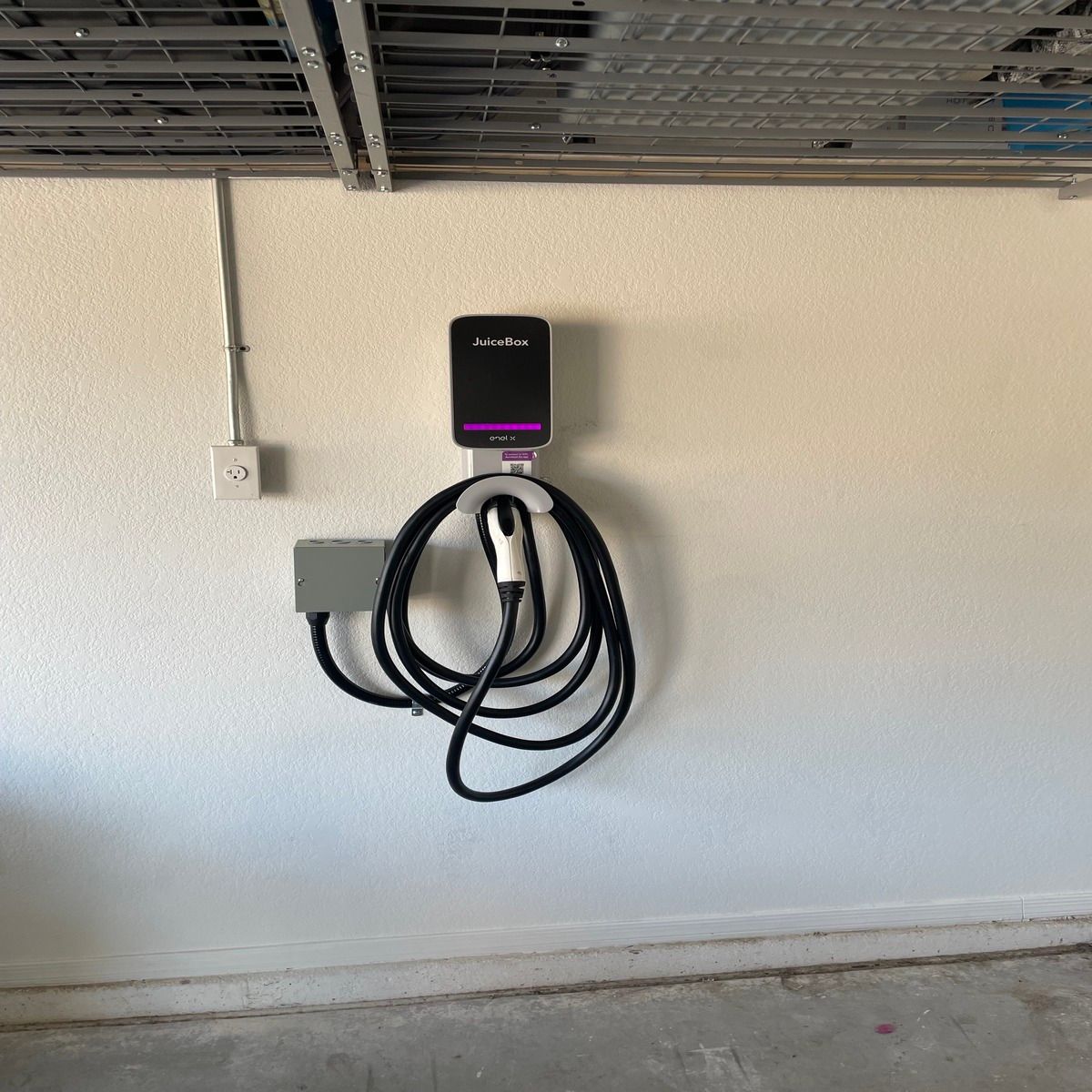
A Level 2 charger belongs on its own dedicated circuit. Because a charging session counts as a continuous load, the breaker and wiring are sized at 125 percent of the charger's draw. A charger pulling 40 amps sits on a 50 amp breaker with conductors rated to match. Whether the unit is hardwired to the wall or plugged into a 50 amp receptacle, the circuit behind it does the real work. Our team calculates the load on your existing panel before anything is mounted, because that calculation tells us whether the panel can carry the new circuit or needs help first.
Where You Find It
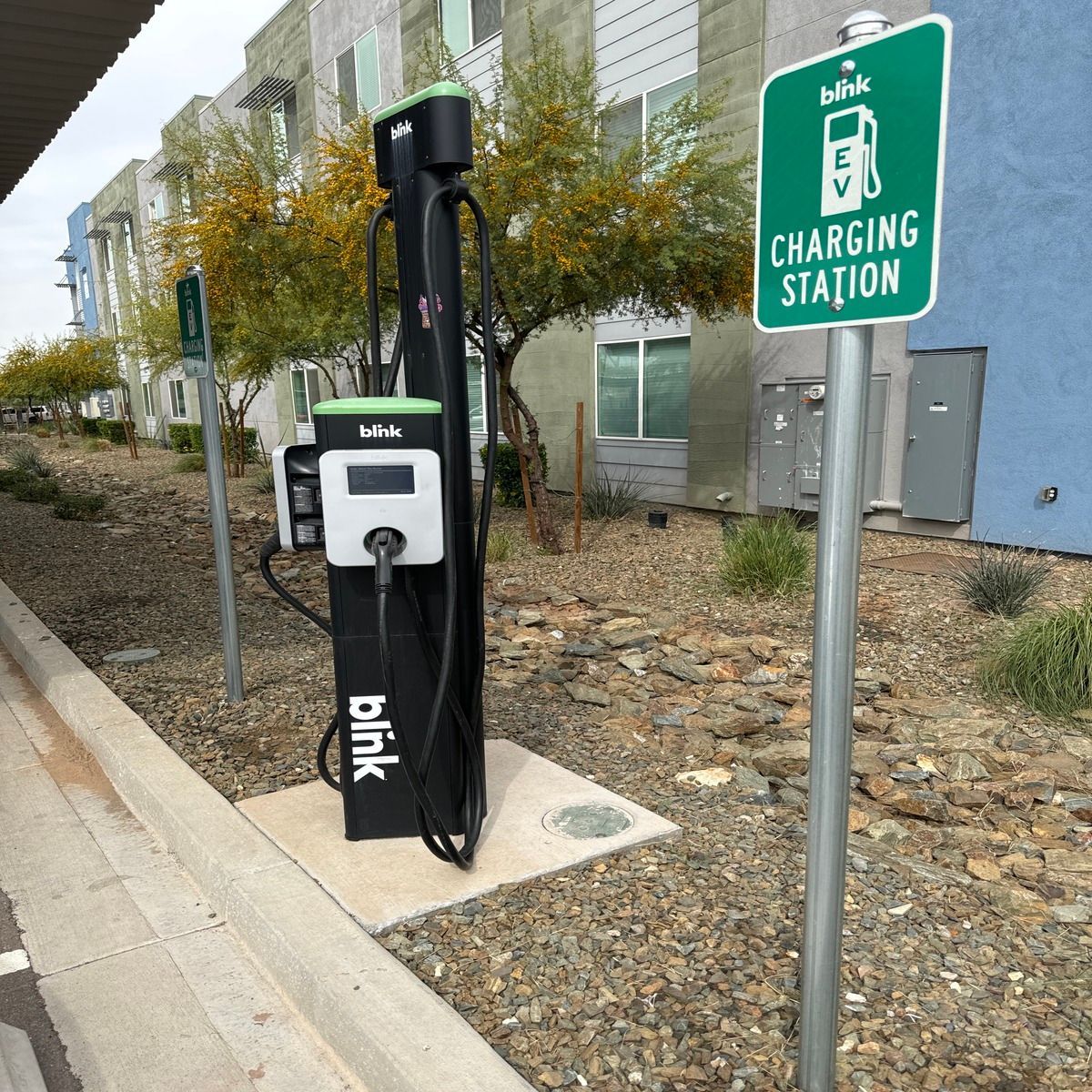
Level 2 is the level found in home garages, workplaces, apartment communities, hotels, and many public parking structures. The connector on the end of the cable usually looks the same whether it is in your garage or in a shopping center lot.
DC Fast Charging: Built for Speed and for Travel
DC fast charging, also called Level 3, is the quickest of the three. It is the category that includes Tesla's own network and the large public stations along major corridors.
Speed
Depending on the vehicle and the station, DC fast charging can add roughly 100 to 250 miles of range in 30 to 45 minutes. Station output ranges from about 50 kilowatts to 500 kilowatts at the high end.
Charging Is A Two Way Relationship
The car and the charger negotiate the rate. If a vehicle can only accept 50 kilowatts, it will not go faster at a station rated for much more. The rate also changes with the battery's state of charge. A battery that is nearly empty accepts power eagerly, while one approaching 80 percent slows down on purpose to protect the cells. That is why drivers on road trips often stop at 80 percent and move on, since the last 20 percent can take as long as the first 70.
Why It Does Not Belong In A Garage
DC fast chargers need high voltage, three phase power, and equipment that converts large amounts of alternating current inside the cabinet. That is a utility scale electrical project, not a home upgrade. Where DC fast charging does make sense is in commercial settings, such as a fleet depot with tight turnaround windows, a travel plaza, or a retail property that wants drivers to stop for a short, high turnover visit.
TIP: If you are weighing the three levels for a business, look at how long vehicles actually sit. Cars parked for four to eight hours during a workday are well matched to Level 2. Vehicles that must be ready again in under an hour are the ones that justify the extra electrical service DC fast charging requires.
Connectors: A Quick Note on What Plugs In Where
For Level 1 and Level 2, many vehicles use a round connector known as J1772. DC fast charging on many non Tesla vehicles uses the CCS connector, which is the J1772 shape with two extra pins below it. Tesla developed its own connector called NACS, and a growing number of other automakers have moved toward it. Adapters exist in both directions.
When we install a home charger, the connector type matters less than most owners expect, because adapters and the shift toward a common standard keep reducing the problem. What matters far more is the capacity behind the wall, since the cable can always be adapted but a panel cannot.
How the Levels Compare in Everyday Use
Level 1
Provides roughly 2 to 4 miles per hour through a standard outlet, requiring no installation. Best for light daily driving or backup.
Level 2
Provides roughly 12 to 32 miles per hour through a dedicated 240 volt circuit. Best for most home and workplace charging.
DC Fast Charging
Provides roughly 100 to 250 miles in 30 to 45 minutes using high power commercial service. Best for travel and fleets.
Think of it the way you think about fueling a gas car. Level 2 is like filling the tank in your own driveway overnight, every night, so you start each day full. DC fast charging is the highway stop when you need to keep moving. Level 1 is a trickle that works only if you do not ask much of it.
What Phoenix Valley Conditions Add to the Picture
Charging here comes with local realities that people in milder climates never think about.
Heat
Summer garage temperatures in the Valley can exceed outdoor readings, while chargers generate additional heat during prolonged loads. Properly sized circuits run cooler because they operate below their limits, helping wiring, connectors, and enclosures handle demanding charging conditions.
Older Homes
Homes in Phoenix, Glendale, Mesa, and Chandler may have 100 amp service. A Level 2 charger drawing 30 to 50 amps can consume significant capacity, especially while air conditioning operates, making panel evaluation important before installation.
Monsoon Season
Monsoon storms can cause grid voltage fluctuations. EV chargers and vehicles contain sensitive electronics, so whole home surge protection at the main panel is worth discussing with permanent charging installations, particularly when existing electrical loads are already substantial.
Utility Coordination
APS guidance generally connects charging needs with daily mileage, noting shorter commutes may suit Level 1 while longer distances favor Level 2. Commercial projects may also require site reviews, which help planning but do not reserve electrical capacity.
Choosing the Right Level for Your Situation
For Homeowners
Add your daily mileage and hours parked at home. Under 30 miles daily with overnight parking may make Level 1 practical. Higher mileage, multiple EVs, or wanting consistent readiness makes Level 2 more convenient for most homeowners.
For Property Managers
Multi tenant properties often use Level 2 chargers at assigned or shared spaces while managing simultaneous demand. Load management software distributes available current among plugged in vehicles, allowing more charging stations without exceeding the building’s electrical capacity.
For Fleet And Commercial Owners
Vehicles returning to a depot nightly often work well with Level 2 chargers at each stall. DC fast charging becomes useful when vehicles must turn around between shifts. A site survey should confirm electrical capacity before hardware selection.
For Everyone
Whatever charging level you choose, panel capacity and wiring matter more than charger brand. A proper installation starts with a load calculation, dedicated circuit sized for continuous use, plus permits and inspection to document completed electrical work.
Common Mistakes We See Across the Valley
Buying More Charger Than The Car Can Use
A 48 amp wall unit paired with a vehicle accepting 32 amps leaves capacity unused and may require a larger electrical panel without delivering faster charging.
Skipping The Panel Check
Installing a charger on the first available breaker can create problems when air conditioning and charging operate together. Tripping breakers may indicate insufficient electrical capacity, not charger failure.
Treating Level 1 As Permanent
A standard outlet can work temporarily, but garage outlets may share circuits or have aging wiring. Continuous charging for months can expose weak connections and overheated receptacles.
Assuming Fast Charging Is Better For The Battery
DC fast charging works well for travel, but overnight home charging is gentler for daily use. Keeping batteries roughly between 20 and 80 percent is commonly recommended.
Frequently Asked Questions
Is Level 2 charging really that much faster than Level 1?
Yes. Level 2 adds roughly 12 to 32 miles of range per hour, while Level 1 adds about 2 to 4. That is six to eight times faster, so the car is full by morning.
Do I need an electrician to install a Level 2 charger?
Yes, we recommend a licensed electrician. A Level 2 charger needs a dedicated 240 volt circuit, and the load calculation, breaker sizing, and wiring must all line up for safe, long operation.
Can I install a DC fast charger at my house?
In practice, no. DC fast chargers require high voltage and three phase power that homes typically lack. They are designed for public stations, fleet depots, and commercial properties.
Does the charger or the car decide how fast charging happens?
Both do, and the slower of the two sets the limit. A car accepting 11 kilowatts will not charge faster on a 19 kilowatt Level 2 unit.
Is Level 1 charging good enough for a short commute?
It can be. If you drive a short distance daily and the car sits at home overnight, a standard outlet in good condition may cover it. Heavier drivers will outgrow it.
Will my older home's panel support Level 2 charging?
It depends on the panel's amperage and what else is running on it. A load calculation shows whether a dedicated circuit fits or whether a subpanel or panel upgrade is needed first.
Matching the Charging Level to Your Driving
Choosing between the three levels comes down to how far you drive, how long the car sits, and what your electrical service can safely deliver. Level 1 keeps a light driver going, Level 2 covers nearly everyone at home, and DC fast charging keeps long trips and busy fleets moving. Once you know which one fits, the work that matters most is the quiet work behind the wall, and getting that right makes charging feel effortless every day.
MaxCharged
in Phoenix, AZ, has spent 10
years helping Valley homeowners and property
managers match chargers
to real panels and real driving habits. A load calculation, a dedicated circuit sized for continuous use, and a proper permit and inspection are the steps that keep a charger running safely through long summer heat. When the equipment fits the vehicle and the electrical service behind it, owners stop thinking about charging at all. They simply plug in and drive.
More EV Charging Articles